 UgandaGorillaTrekking.tours
Home › Guides › How Many Mountain Gorillas Are Left? Facts and Myths
How Many Mountain Gorillas Are Left? Facts and Myths
How many mountain gorillas are left? Roughly 1,063 live in the wild, the highest estimate since conservation began. The figure adds the Bwindi-Sarambwe census to the Virunga count, and it counts known individuals only.
Quick answer The current count in one short answer
An estimated 1,063 mountain gorillas are left in the world. The number comes from the 2018 census of Bwindi Impenetrable National Park and the Sarambwe reserve, with results published the following year. It is the highest estimate since conservation of the subspecies started.
Key takeaways
- Bwindi Impenetrable National Park holds about half of all mountain gorillas, see how many gorillas live in Bwindi.
- Start trip planning with uganda gorilla trekking.
- Short on time? Compare the 1-day Bwindi gorilla tour from Kigali.
- Want more time in the forest? Look at the 4-day double gorilla trek in Bwindi.
Is it true that mountain gorillas are almost extinct?
Mountain gorillas are endangered, not almost extinct, and their numbers are rising.
This is the most common wrong belief, and the facts are more hopeful. The subspecies was in real danger a century ago, but the trend has turned.
What the numbers actually show
The subspecies was discovered in 1902 and then endured war, hunting, habitat destruction and disease. Numbers fell so low that the IUCN listed mountain gorillas as critically endangered. Once the count passed 800 the status improved to endangered. Today about 1,063 remain, the highest figure since conservation started, and numbers have recently been rising.
That still makes the mountain gorilla the subspecies with the smallest population of any gorilla. It is a conservation success in progress, not a lost cause.
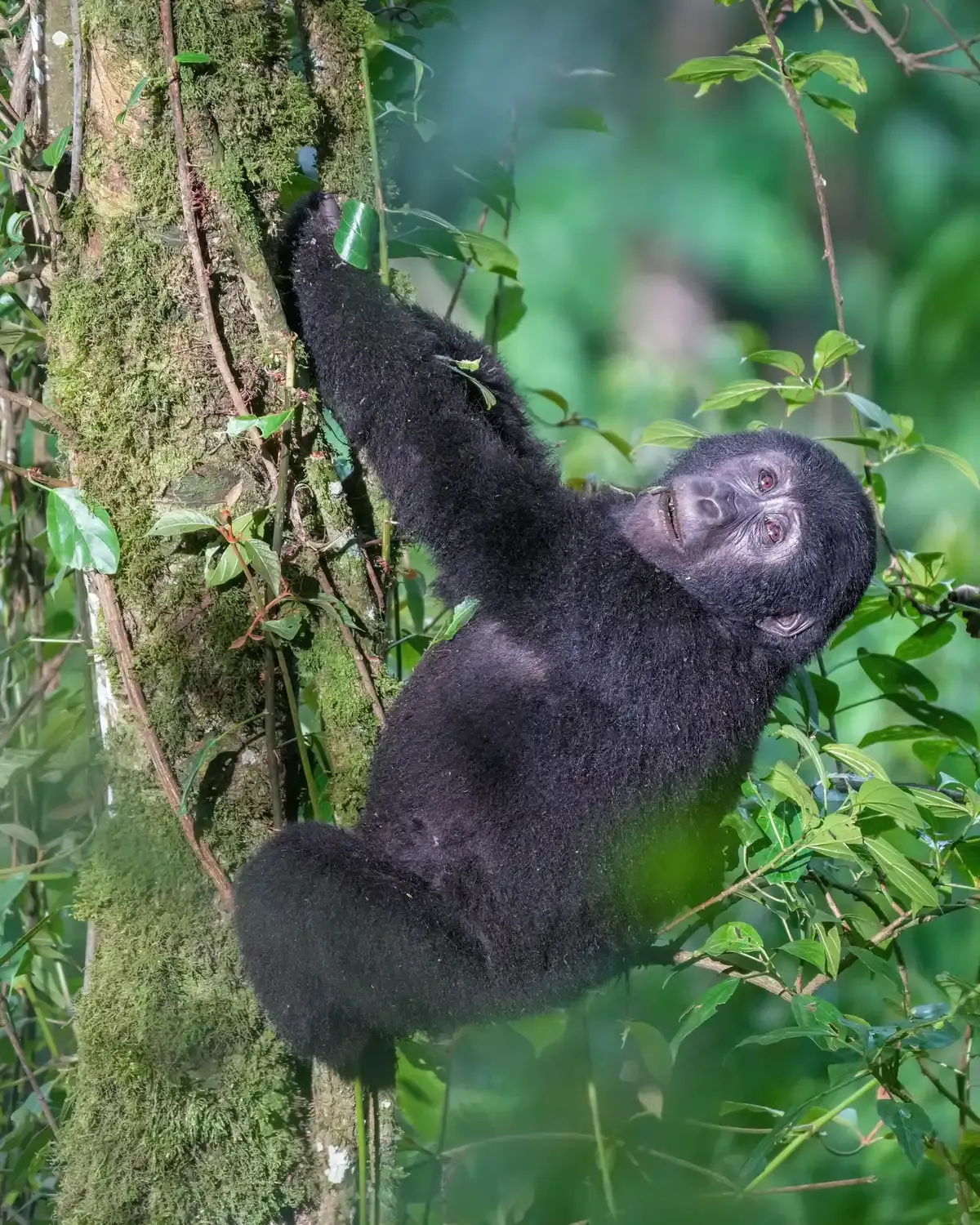
A gorilla climbing a tree in Bwindi. Photo: Giles Laurent, CC BY-SA 4.0, via Wikimedia Commons.
How many mountain gorillas are left in the world?
About 1,063 mountain gorillas are left in the world, based on the last full census.
The figure everyone quotes needs a bit of explanation, because it is an estimate of known individuals rather than a live headcount.
Where the 1,063 comes from
The 1,063 estimate comes from the census of Bwindi Impenetrable National Park and the neighbouring Sarambwe forest reserve carried out in 2018, with results published the following year. That survey gave the estimated global figure of known mountain gorillas in the wild. It was the highest total since conservation started.
A census on this scale takes years, so a newer figure does not exist yet. Any page promising an exact fresh count is guessing. The honest answer is that around 1,063 were counted, numbers have been rising, and the next census will update the total.
| Population | Where | Share |
|---|---|---|
| Bwindi population | Bwindi Impenetrable National Park and Sarambwe reserve, Uganda | Around 459 individuals, almost half the world total |
| Virunga population | Virunga Mountains across Mgahinga (Uganda), Volcanoes (Rwanda) and Virunga National Park (Congo) | not stated separately |
Source: Uganda Wildlife Authority.
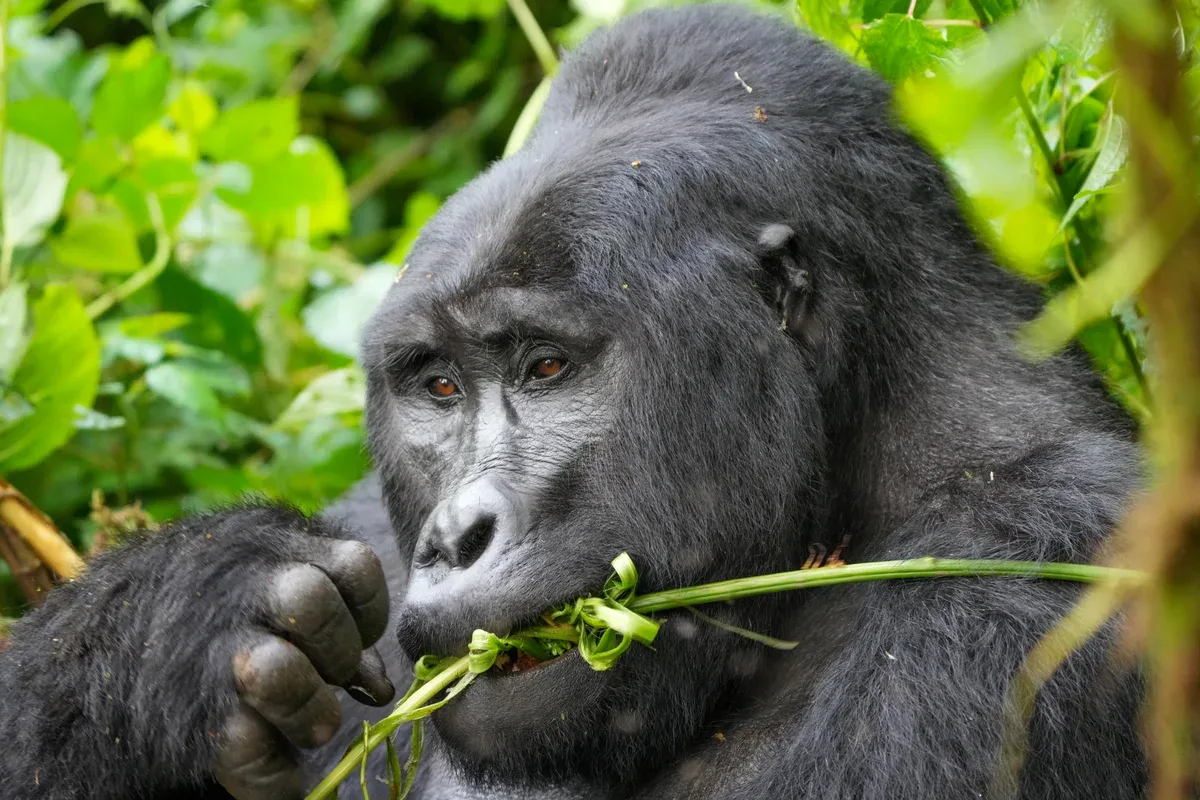
A silverback feeding in Bwindi. Photo: Giles Laurent, CC BY-SA 4.0, via Wikimedia Commons.
What country has the most mountain gorillas?
Uganda has the most mountain gorillas, because it holds the entire Bwindi population plus part of the Virunga population.
The subspecies lives in only three countries, and one of them holds the clear majority.
Two populations, three countries
Mountain gorillas survive in two isolated populations. One lives in the Virunga Mountains, a chain of volcanoes shared by Mgahinga in Uganda, Volcanoes National Park in Rwanda and Virunga National Park in Congo. The other lives only in Uganda's Bwindi Impenetrable National Park.
Since Bwindi alone protects approximately 459 gorillas, almost half the world total, Uganda holds more than any other country. Bwindi became a UNESCO World Heritage Site in 1994 and covers 321 km2 between 1,160 m and 2,607 m above sea level. For a trekker that means Uganda offers more permits and more trailheads than anywhere else. Bwindi is reached at four trailheads: Buhoma in the north, Ruhija in the east, and Rushaga and Nkuringo in the south near Kisoro.
Sources: Uganda Wildlife Authority, UNESCO World Heritage Centre.
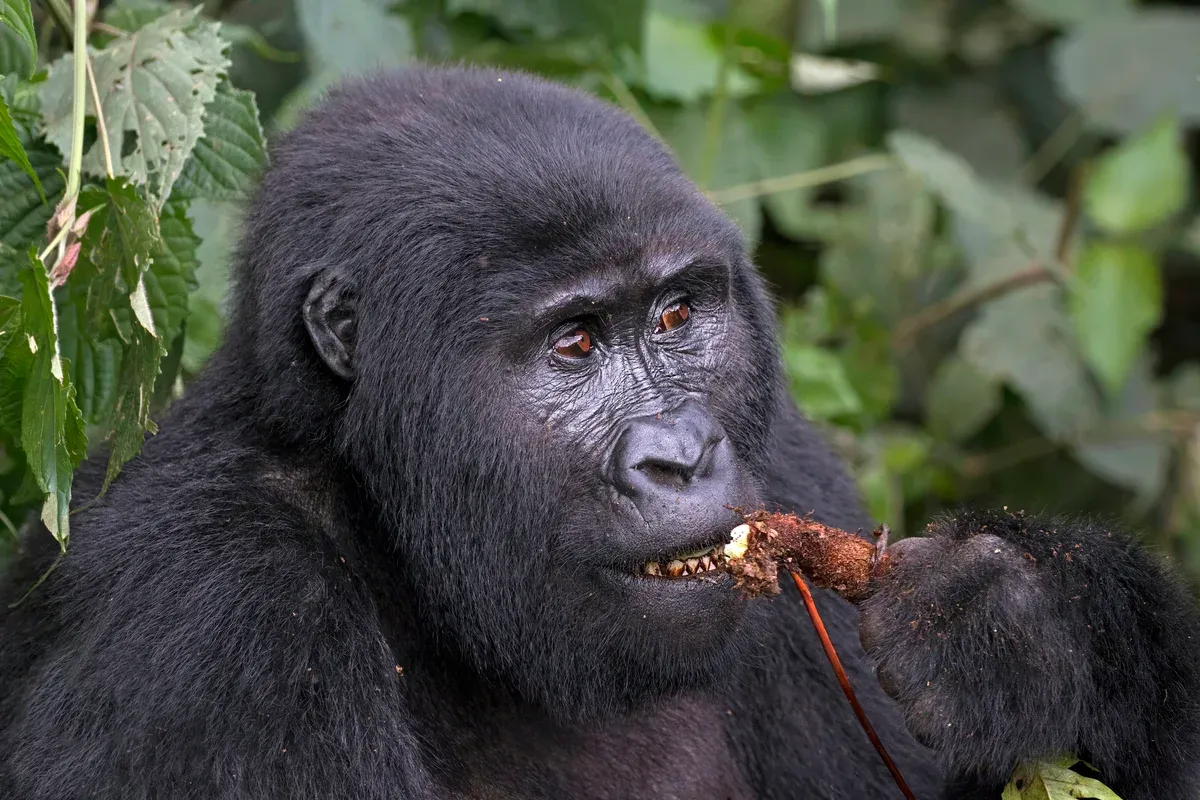
A female of the Mubare group in Buhoma eating a root. Photo: Charles J. Sharp, CC BY-SA 4.0, via Wikimedia Commons.
Where do mountain gorillas live?
Mountain gorillas live only in two forested mountain regions, the Virunga Massif on the Uganda-Rwanda-Congo border and Bwindi Impenetrable National Park in Uganda.
No mountain gorillas live anywhere else in the wild, which is why every one of these forests matters so much.
The two homes
The Virunga population moves across the high volcanic slopes of Mgahinga Gorilla National Park in Uganda, Volcanoes National Park in Rwanda and Virunga National Park in Congo. Mgahinga is Uganda's smallest national park at 33.7 km2, sitting between 2,227 m and 4,127 m.
The Bwindi population lives in Bwindi Impenetrable National Park, a 321 km2 UNESCO World Heritage Site of steep rainforest between 1,160 m and 2,607 m. These cool, wet, high-altitude forests are the only place on earth where the subspecies survives.
Source: Uganda Wildlife Authority.
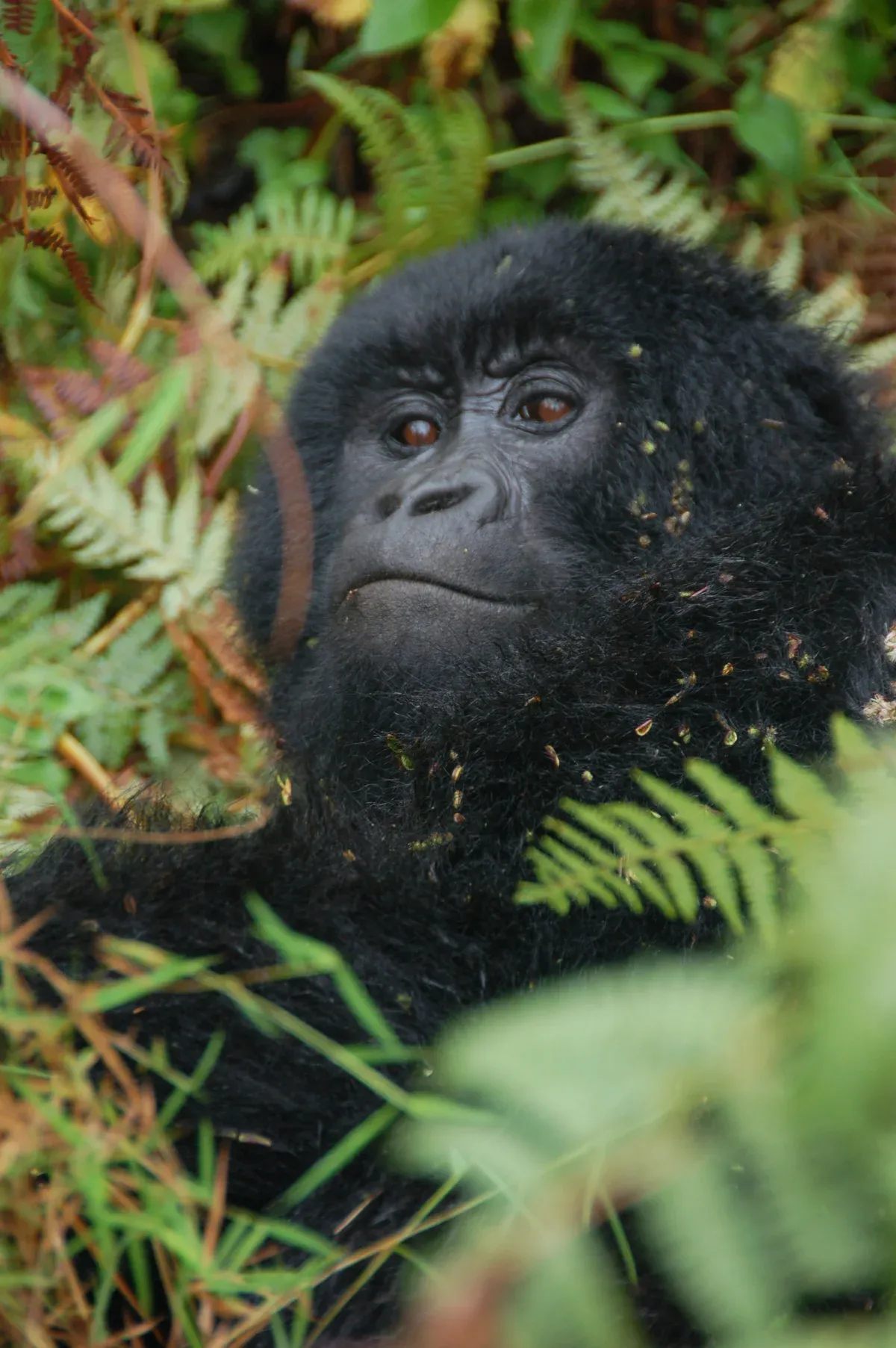
A mountain gorilla in Mgahinga. Photo: Dylan Walters, CC BY 2.0, via Wikimedia Commons.
Why are mountain gorillas endangered?
Mountain gorillas are endangered because of habitat loss, poaching, human diseases, mining, and war and civil unrest in their range.
The threats have not disappeared even though the population is growing. They are simply being managed better.
The main threats
Habitat loss is the biggest pressure, because people need farmland around the forests. Poaching still happens, often in snares set for other animals. Human diseases are a real danger because gorillas are so closely related to us. Mining pushes into their range, and past war and civil unrest in the region has hit the populations hard.
The IUCN listed the subspecies as endangered in 2018, an improvement from critically endangered once numbers passed 800. Conservation work, ranger patrols and carefully guided tourism are what keep the trend moving the right way.
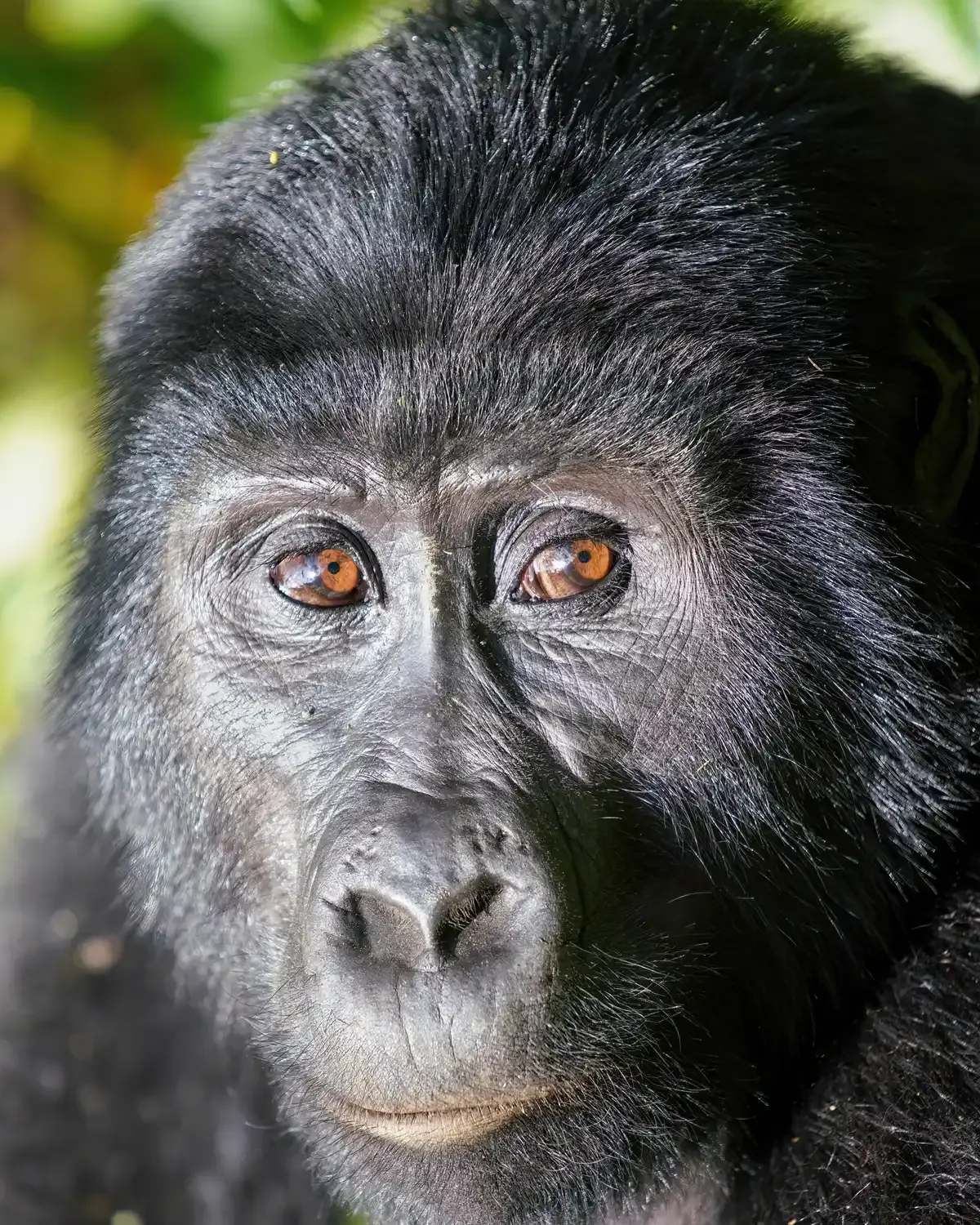
A mountain gorilla in Bwindi Impenetrable National Park. Photo: Giles Laurent, CC BY-SA 4.0, via Wikimedia Commons.
How many gorillas are left in the world?
All gorilla species and subspecies combined number far more than mountain gorillas, but the exact world total is not stated in the sources behind this page.
This question mixes mountain gorillas with their western lowland cousins, and the honest answer separates them.
Mountain gorillas versus all gorillas
The mountain gorilla is a subspecies of the eastern gorilla, and it has the smallest population of any gorilla, split into the two groups described above. The far more numerous western lowland gorilla lives in the forests of central Africa, so the total for all gorillas is much higher. A reliable current figure for all gorillas worldwide is not stated in the sources behind this page, so we leave it out rather than repeat a worn number.
Tours That Fit
If the population story makes you want to meet a few of them, these treks put you in their forest.
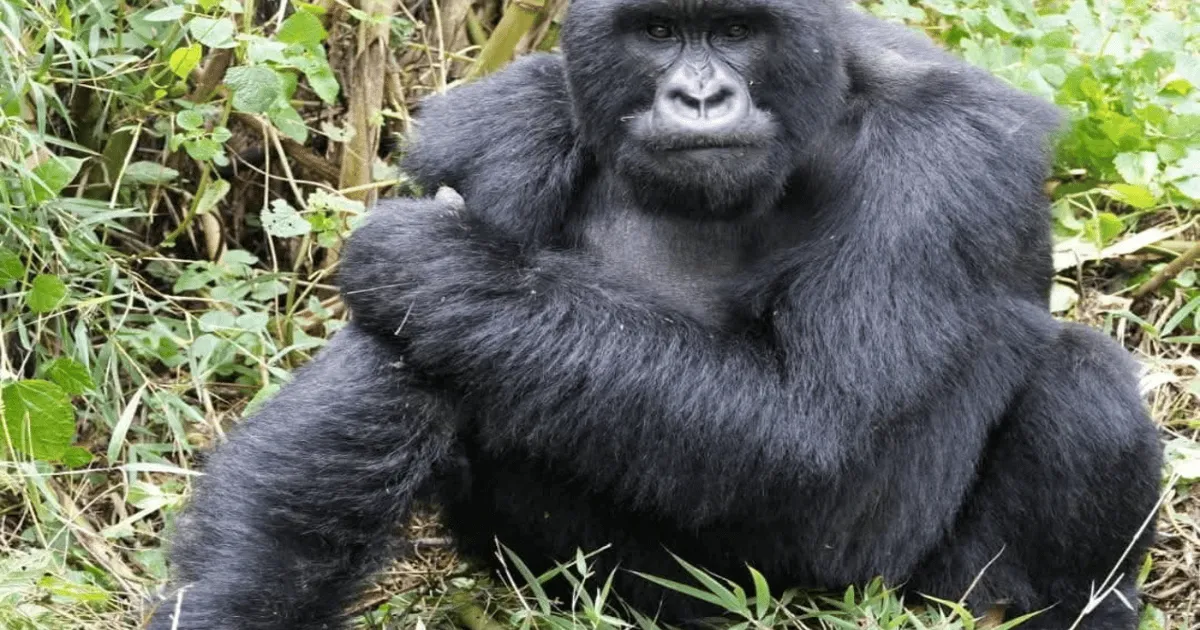
4-Day Double Mountain Gorilla Trekking Safari in Bwindi
Four days from Kampala with two gorilla permits per person: two different families on two days in Bwindi.
- Cancellation
- Free 24h cancellation
- Operator
- Topi Tours
How many silverback gorillas are left in the world?
No separate count of silverbacks exists, but every habituated group counted in the census contains one dominant adult male silverback.
The census counts individuals by group, and the silverback is the anchor of each group.
How silverbacks fit the count
Gorilla groups usually contain several females with young and one dominant adult male silverback. Some males live alone before winning a group. Because roughly 1,063 individuals live in groups built around silverbacks, the number of silverbacks is a fraction of the total, though no official separate figure is published.
Counting habituated groups and their members is exactly how the population estimates are built. Rangers and researchers know many groups by name, which is what makes the census more reliable than a guess.
Is it true that gorillas are dangerous brutes?
Habituated mountain gorillas are not dangerous to trekkers who follow the rules, and the aggressive image is a myth from old films.
The popular picture of gorillas as chest-beating monsters says more about cinema than about the animals. The real behaviour is calmer and stranger than the myth.
Are mountain gorillas dangerous?
Wild gorillas deserve distance and respect, but the groups trekkers visit are habituated, meaning they have been slowly used to calm human presence over years. Charges are rare and rangers know how to prevent them. Males reach 1.61 to 1.71 m standing and 120 to 191 kg, females weigh 70 to 98 kg, so you keep the required distance for their safety as much as yours.
Would 100 men beat a gorilla?
This internet debate says nothing useful about real gorillas. A silverback can weigh up to 191 kg, and gorillas resolve conflicts through displays rather than fights. In the wild, no hundred men would ever face one gorilla, and the question ignores that they are a peaceful, endangered species you watch from a respectful distance, not opponents.
Is Dian Fossey still alive?
Dian Fossey was murdered in Rwanda and her death is not stated in detail in the sources behind this page, so we give only the facts we can confirm: she was the researcher who made mountain gorillas famous, and she is not alive. Her long-term research in the Virunga Mountains helped lay the groundwork for the counts that produced the 1,063 figure.
Do gorillas engage in homosexuality?
Mountain gorilla groups are built around one dominant silverback with several females, according to the sources behind this page. Claims about same-sex behaviour in gorillas are not stated in those sources, so we make no claim either way.
What do mountain gorillas eat and how long do they live?
Mountain gorillas eat forest vegetation, and a lifespan figure is not stated in the sources behind this page.
Their diet is one reason they need such large, intact forests.
Life in the forest
Mountain gorillas spend their days feeding on the vegetation of their high-altitude forests. A precise list of foods and a confirmed lifespan are not stated in the sources behind this page. What matters for the population story is simpler: they need large, healthy, protected forests, which is exactly what habitat loss threatens.
Protecting the forest protects the gorillas.
How Do Tourists Help Mountain Gorillas?
Carefully guided gorilla visits bring income to local people, which makes the gorillas and their forest worth protecting.
The rising population and the tourism industry grew up together, and the link is direct.
How a trek supports the population
Ecotourism, including carefully guided trips to see gorillas, is an important source of income for local people. Park entry for Bwindi and Mgahinga costs US$40 a day for foreign non-residents, according to the Uganda Wildlife Authority, and that fee is already included in the gorilla permit on the tracking day. Permit revenue funds rangers and research, and community income gives people near the parks a stake in keeping the forest standing.
If you want to see the result yourself, a trek in Bwindi puts you among roughly half the world's mountain gorillas. The 2-day Uganda gorilla trek from Kigali with permit included is a fast way to do it, and the 3-day Bwindi trek with the Batwa Trail and Lake Bunyonyi adds the human side of the story.
Sources: Uganda Wildlife Authority, Uganda Wildlife Authority.
Frequently Asked Questions
How many mountain gorillas are left in 2022?
The accepted figure remains about 1,063, because it comes from the 2018 Bwindi-Sarambwe census published the following year. No later full census figure is published, so any newer number you see is an estimate without a census behind it. Learn more in our gorilla facts guide.
How many gorillas are in Bwindi Impenetrable National Park?
Bwindi protects approximately 459 mountain gorillas, almost half of the world's remaining population, according to the Uganda Wildlife Authority. Plan your visit with our Bwindi treks.
Are mountain gorillas dangerous to trekkers?
No. The groups trekkers visit are habituated to calm human presence and charges are rare. Rangers guide every visit and set the rules you follow.
Where do mountain gorillas live?
Only in two places: the Virunga Mountains across Uganda, Rwanda and Congo, and Bwindi Impenetrable National Park in Uganda. See our Mgahinga and golden monkey trek for the Virunga side.
Why are mountain gorillas endangered?
Because of habitat loss, poaching, human diseases, mining, and war and civil unrest in their small range. Carefully managed tourism is one of the forces working against those threats.
Is the mountain gorilla still critically endangered?
No. The subspecies was moved to endangered once numbers exceeded 800, and the IUCN lists it as endangered. The population is now the highest since conservation started.
More Guides
- Best Time for Gorilla Trekking in Uganda: Month by Month
Gorilla trekking in Uganda is best from June to September in 2027, with 27°C highs and drier trails. April and May bring quieter forests.
- Bwindi Gorilla Trekking: Sectors, Groups and How a Trek Works
A Bwindi gorilla permit costs $800 in 2027 and buys a guided hike to one hour with a habituated family. Compare tours and check dates.
- Gorilla Trekking in Uganda from Kigali: Routes, Border and Timing
Kigali reaches Bwindi in 3 to 4 hours via the Cyanika border. One-day treks in 2027 start at $300 plus the $800 permit. Compare tours.