 UgandaGorillaTrekking.tours
Home › Guides › What to Wear for Gorilla Trekking: Uganda Packing List
What to Wear for Gorilla Trekking: Uganda Packing List
What to wear for gorilla trekking comes down to one outfit: long-sleeved neutral shirts, quick-dry trousers, waterproof boots, tall socks with trousers tucked in, gloves and a rain jacket. Finding a family group can take two to eight hours, so every piece must work through wet undergrowth and a morning that starts around 10°C to 14°C.
Quick answer The complete outfit in three sentences
Wear a moisture-wicking long-sleeved shirt, quick-dry long trousers, ankle-high waterproof boots and tall socks with the trousers tucked in. Add gardening gloves, a brimmed hat and a waterproof rain jacket in your daypack. Stick to earth tones and leave camouflage, animal print and perfume at home.
Key takeaways
- Check the Uganda gorilla permit price and rules before you pack, since the permit sets the trek date.
- See how a Bwindi gorilla trek works so you know what your clothes must survive.
- Compare the best time for gorilla trekking in Uganda to decide how much rain gear to bring.
- Browse uganda gorilla trekking tours that match your fitness and starting airport.
What should I wear when gorilla trekking?
You need long sleeves, long quick-dry trousers, broken-in waterproof boots, tall socks, gloves and a rain jacket, all in neutral colours.
Bwindi takes between 1,400mm and 2,400mm of rain a year depending on the sector, and the undergrowth stays wet even on dry days. Morning briefings run around 10°C to 14°C, warming toward the low twenties by mid morning. Dress for water, vegetation and a temperature swing.
Head to toe
Start with two or three fast-drying long-sleeved shirts, the number recommended for humidity and uphill trekking. On a cold morning wear leggings under your trekking pants and pull your socks over the legging cuffs.
Long quick-dry trousers come next, never shorts. Nettles, thorns and stinging vegetation strip bare skin. Tall socks go over the trouser cuffs, because safari ants cross trails in columns and swarm up a boot into a trouser leg within seconds.
Ankle-high waterproof boots, broken in before the trip, carry you through mud. Gardening gloves protect your hands when you grab vines and nettles on steep sections. A brimmed hat and sunglasses handle sun in clearings, and a waterproof rain jacket rides in the daypack in every season.
| Body | Item | Why |
|---|---|---|
| Torso | 2 to 3 fast-dry long-sleeved shirts | Humidity, uphill effort, sun and nettles |
| Torso | Light fleece or mid layer | Morning briefings run 10°C to 14°C |
| Legs | Quick-dry long trousers, optional leggings beneath | Cold mornings, wet undergrowth |
| Feet | Ankle-high waterproof boots, broken in | Mud and steep, slippery trails |
| Feet | Tall socks over trouser cuffs | Stops safari ants entering trouser legs |
| Legs | Gaiters | Mud, water and ants on the lower leg |
| Hands | Gardening or trekking gloves | Gripping vines and stinging plants |
| Head | Brimmed hat, sunglasses | Sun in clearings |
| Pack | Waterproof rain jacket | Rain falls in every sector, every season |
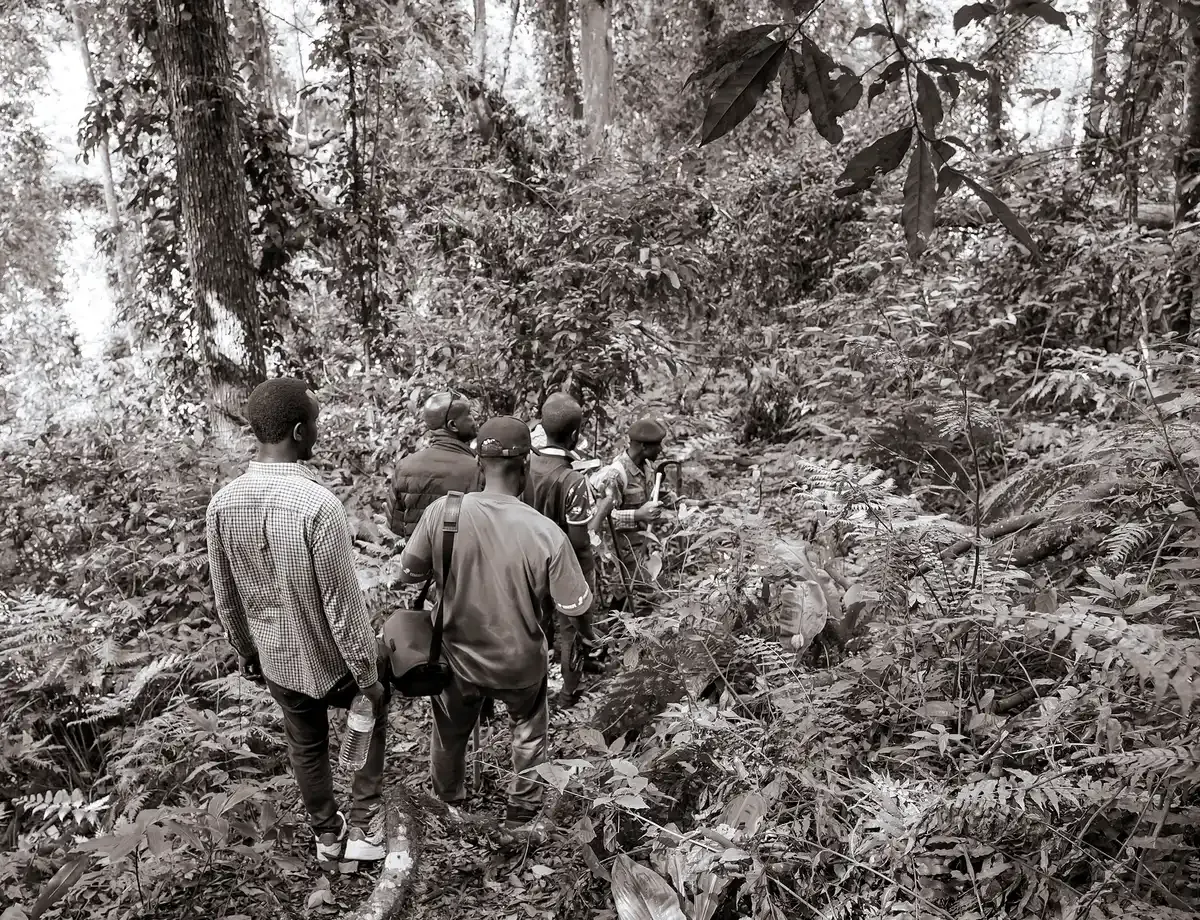
Visitors on a forest trail in Mgahinga. Photo: Happyartst, CC BY-SA 4.0, via Wikimedia Commons.
What are the best pants and shoes for gorilla trekking?
The best pants are long, quick-drying trekking trousers worn over leggings, and the best shoes are broken-in ankle-high waterproof hiking boots.
Trek duration runs from 2 to 7 hours in Bwindi and Mgahinga before you get your hour with the gorillas. Feet and legs take the most punishment, so this is where to spend your budget.
Pants
Choose lightweight synthetic trekking trousers that dry fast and brush off mud. Denim and cotton stay wet for hours. A thin pair of leggings worn underneath adds warmth for cold mornings, with socks pulled over the legging cuffs to keep ants out.
| Option | Verdict |
|---|---|
| Synthetic quick-dry trekking trousers | Best choice, dries fast, protects from nettles |
| Leggings under trekking pants | Good on cold mornings, tuck socks over them |
| Shorts | Never, stinging vegetation and ants |
| Jeans or cotton | Avoid, stays wet and heavy |
Boots
Waterproof ankle-high hiking boots with grippy soles are the one item you cannot improvise. Buy them weeks ahead and walk them in, because a new boot on a steep Bwindi slope ends in blisters. Contact lenses beat glasses that mist up in the humidity, so wear contacts if you have them.
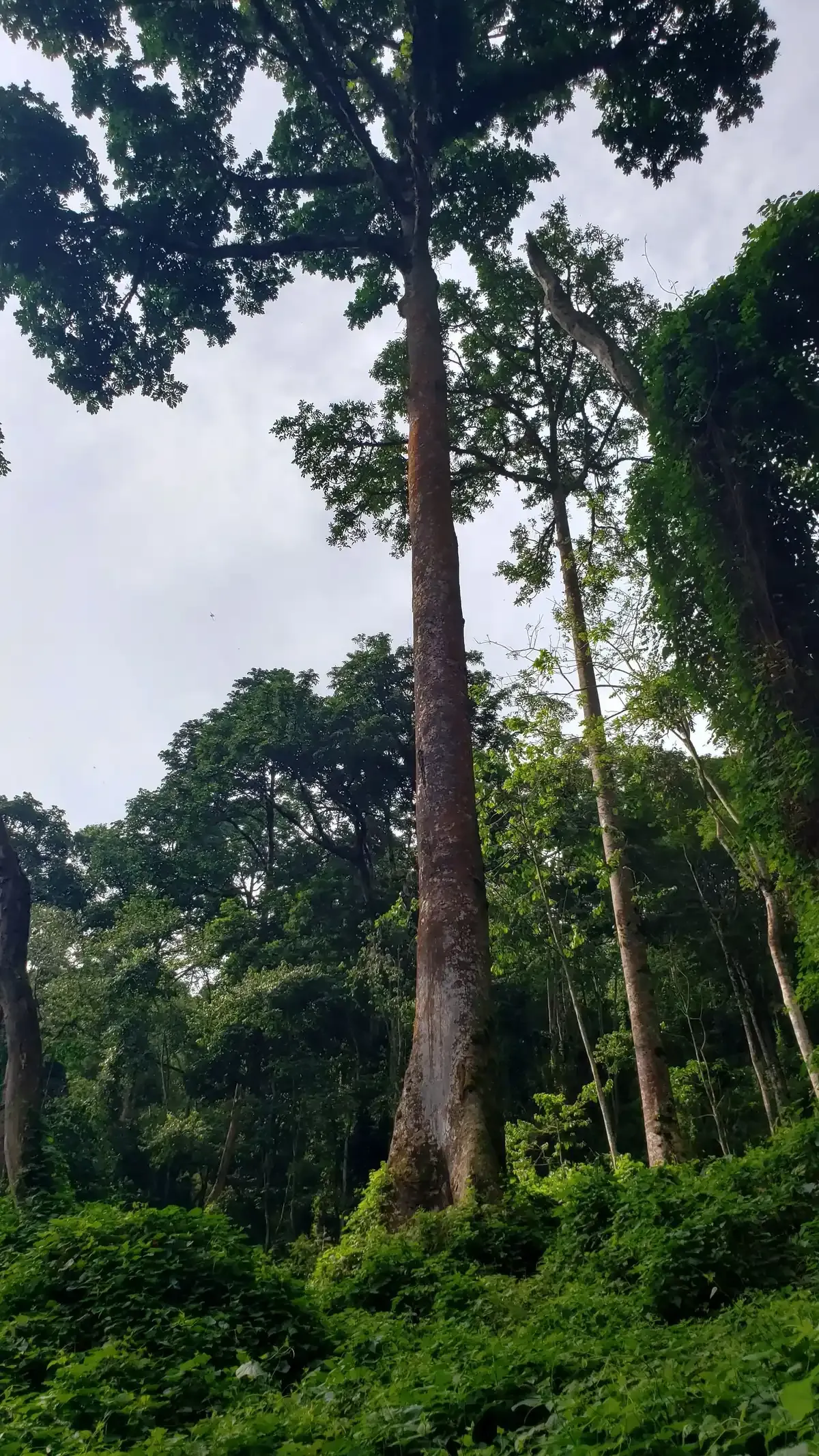
The tall trees of Bwindi. Photo: Ugpics, CC BY-SA 4.0, via Wikimedia Commons.
Can you wear blue in Uganda? What about colours?
Blue is not banned but earth tones are the safe choice, and camouflage and animal print must stay out of your bag.
Tsetse flies are drawn to dark blues and bright colours in many African parks, and the forest adds its own rules about what scares gorillas.
The colour rule
Wear muted greens, browns, greys and khaki. These hide mud, stay cool and keep insects less interested. Avoid camouflage because it is illegal for civilians to wear in many areas.
Avoid animal print because gorillas may become alarmed at seeing what looks like a leopard. Khaki and light colours show tsetse flies less than black and dark blue.
| Colour | Wear it? |
|---|---|
| Khaki, olive, brown, grey | Yes, the standard choice |
| Bright colours | Not banned but they attract attention and insects |
| Dark blue and black | Avoid, tsetse flies favour them |
| Camouflage | Never, illegal for civilians in many areas |
| Animal print | Never, can alarm gorillas |
Scent matters too
Leave perfume, cologne and heavily scented lotions at home. Gorillas have an exceptional sense of smell, and strong scents attract mosquitoes and tsetse flies. Pack unscented deodorant and sunscreen.
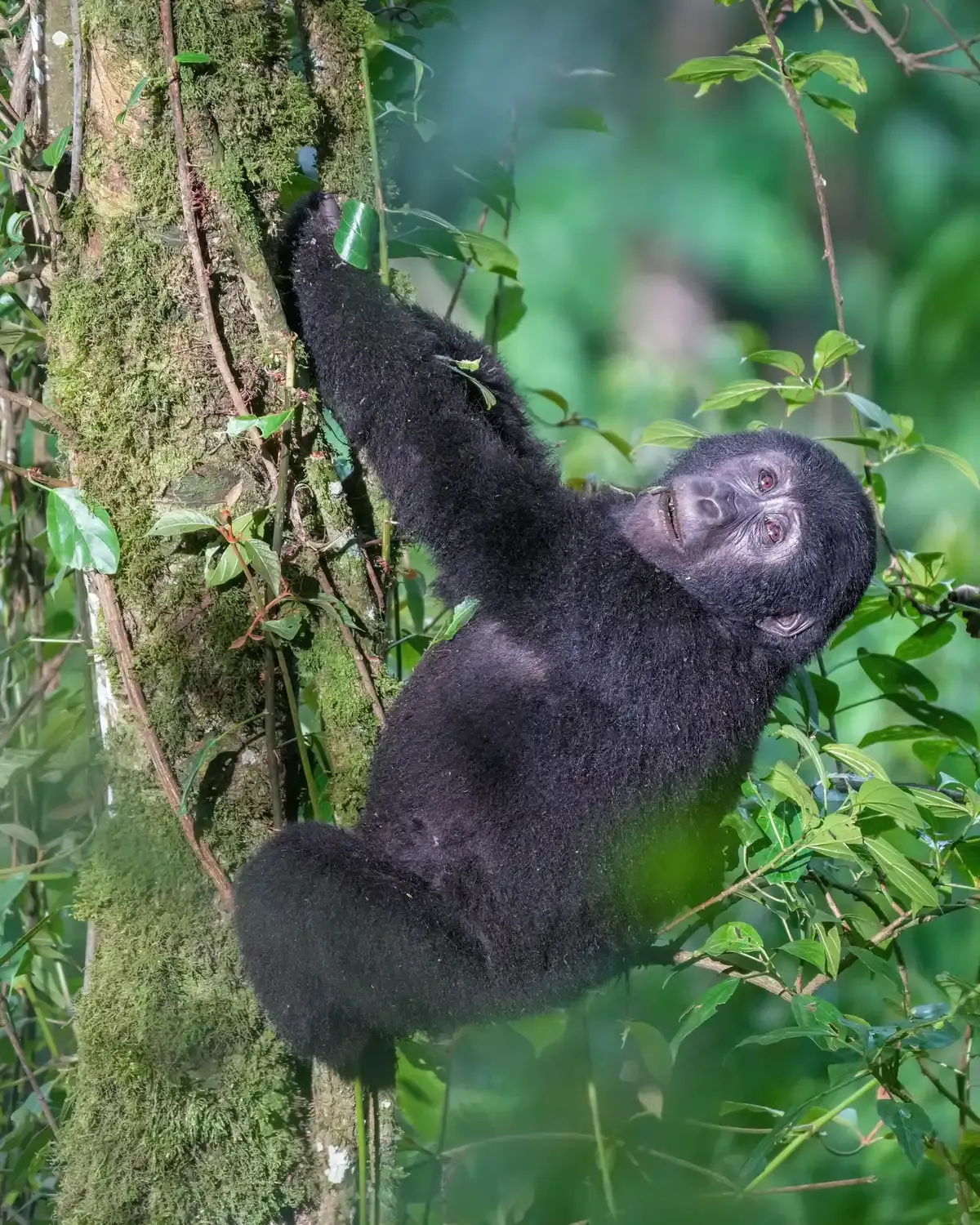
A gorilla climbing a tree in Bwindi. Photo: Giles Laurent, CC BY-SA 4.0, via Wikimedia Commons.
What should you not wear for gorilla trekking?
Skip shorts, cotton, camouflage, animal print, perfume and brand-new boots.
A few common packing choices fail fast in the forest. Each one has a simple reason.
Leave at home
Shorts expose skin to nettles and safari ants. Cotton jeans hold water all day. Camouflage is illegal for civilians in many areas and animal print can frighten gorillas.
Perfume and scented lotion carry far in humid air and draw insects. New unworn boots cause blisters within the first hour. Keep your phone zipped away during the hour with the gorillas, and remember flash photography is banned.
Source: Uganda Wildlife Authority.
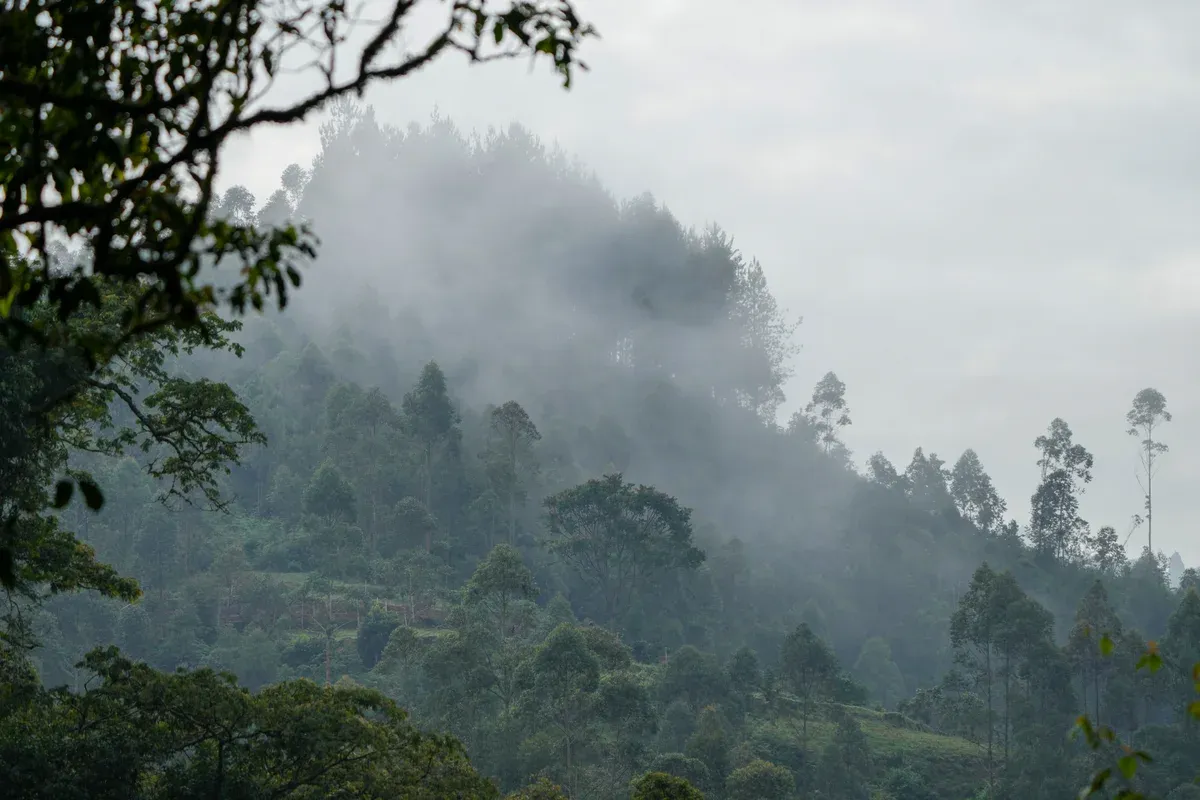
Morning mist over the ridges of Bwindi. Photo: Giles Laurent, CC BY-SA 4.0, via Wikimedia Commons.
What should a woman wear for trekking?
A woman wears the same kit as anyone else: a supportive sports bra, moisture-wicking long-sleeved top, trekking trousers over leggings, tall socks, boots and gloves.
There is no separate women's list. The kit below just adapts the core outfit for comfort on a 2 to 7 hour trek.
Women's adjustments
A good sports bra matters on steep, muddy descents. Leggings under trekking trousers add warmth on cold mornings, with socks pulled over the cuffs to block ants. Long hair tied back keeps it out of vines, and a wide-brimmed hat does more work than sunglasses under the canopy.
Contact lenses beat glasses that mist up. Skip jewellery, which catches on vegetation, and pack any spare layers in a dry bag inside the daypack.
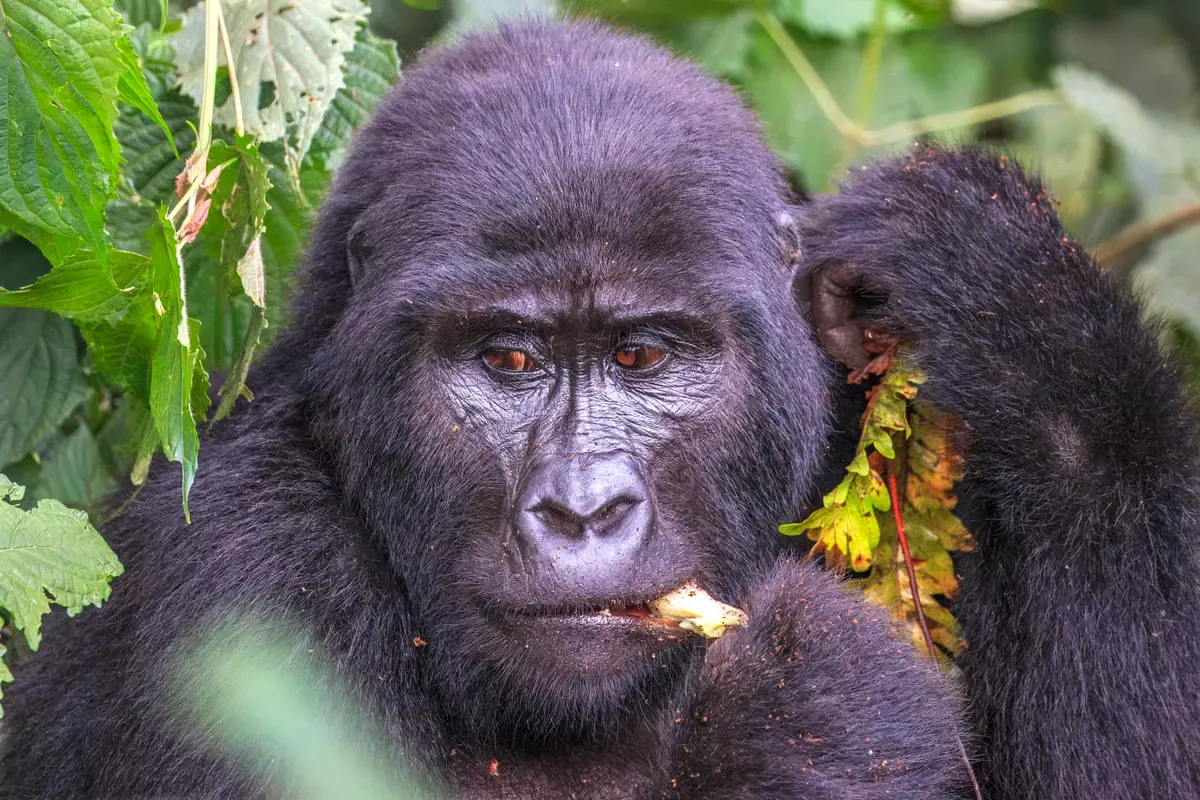
A female mountain gorilla in Bwindi. Photo: Charles J. Sharp, CC BY-SA 4.0, via Wikimedia Commons.
Do you need gaiters, gloves and face masks?
Yes, gaiters and gloves earn their place on every trek, and you carry face masks for the moment you reach the gorillas.
Three small items do outsized work in Bwindi. Pack all of them.
Gaiters and gloves
Gaiters seal the gap between boot and trouser cuff, keeping out mud, water and the safari ants that swarm up a boot within seconds. Gardening gloves with a grippy palm cost little and save your hands when you pull yourself up slopes through nettles and vines.
Face masks
Face masks are worn when you reach the gorillas, and you keep a spare in a pocket. Put masks and any spares in a zip-lock bag inside your daypack so they stay dry during the rain. Gorillas share diseases with people, so do not trek at all if you have a cold or other infectious illness.
Source: Uganda Wildlife Authority.
What goes in your daypack, and should you hire a porter?
Your daypack holds rain jacket, water, snacks, masks, camera and insect repellent, and a porter can carry it all for UGX 40,000.
UWA lists a porter fee of UGX 40,000, paid locally in cash. Many porters are reformed poachers who rely on trekking income, so hiring one helps conservation directly.
Daypack contents
A 20 to 30 litre pack with a rain cover is enough. Inside it: the waterproof rain jacket, drinking water, snacks, insect repellent, sunscreen, face masks in a dry bag, wipes, your camera with no flash use, and cash for tips. Bring cash for tipping your guide after the trek, and a light pair of lodge clothes for the evening.
Porters
A porter carries your daypack and often gives a steadying hand on the steep mud. UWA lists the porter fee at UGX 40,000, and a tip on top is welcome. If you would rather not buy and carry boots, gaiters and poles home, note that some lodges and operators supply waterproof ponchos and pants, backpacks, gloves, gaiters, walking sticks and boots on request, so ask your operator before you shop.
Source: Uganda Wildlife Authority.
Tours That Fit
Trips that give you time to pack right and trek at a comfortable pace.
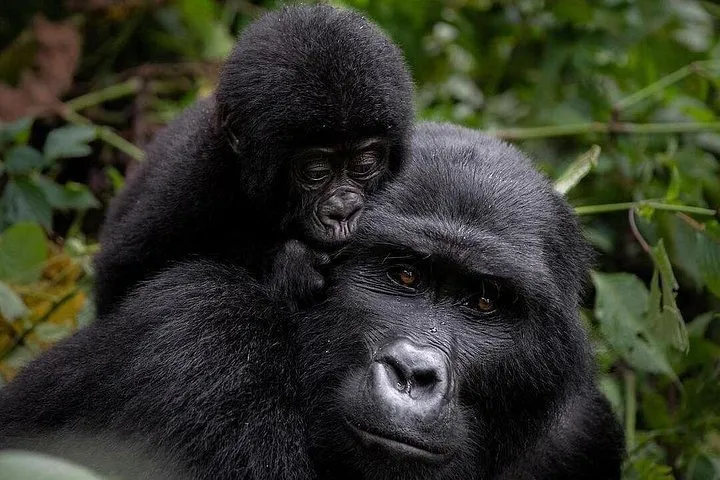
3-Day Bwindi Gorilla Trek with the Batwa Trail and a Lake Bunyonyi Canoe Ride
Three days from Entebbe: the Batwa trail, a Bwindi gorilla trek and a canoe ride on Lake Bunyonyi. Permit, lodges and meals included.
- Cancellation
- Free 24h cancellation
- Operator
- Dav Safaris
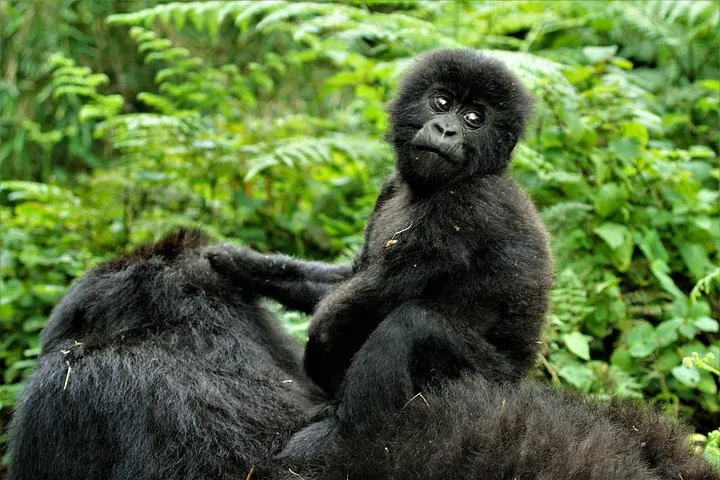
2-Day Uganda Gorilla Trek in Bwindi from Kigali, Permit Included
Two days from Kigali with the Genocide Memorial, a night at Rushaga and the Bwindi gorilla trek. Permit and meals included.
- Cancellation
- Non-refundable
- Operator
- Rwanda Eco Company and Safaris
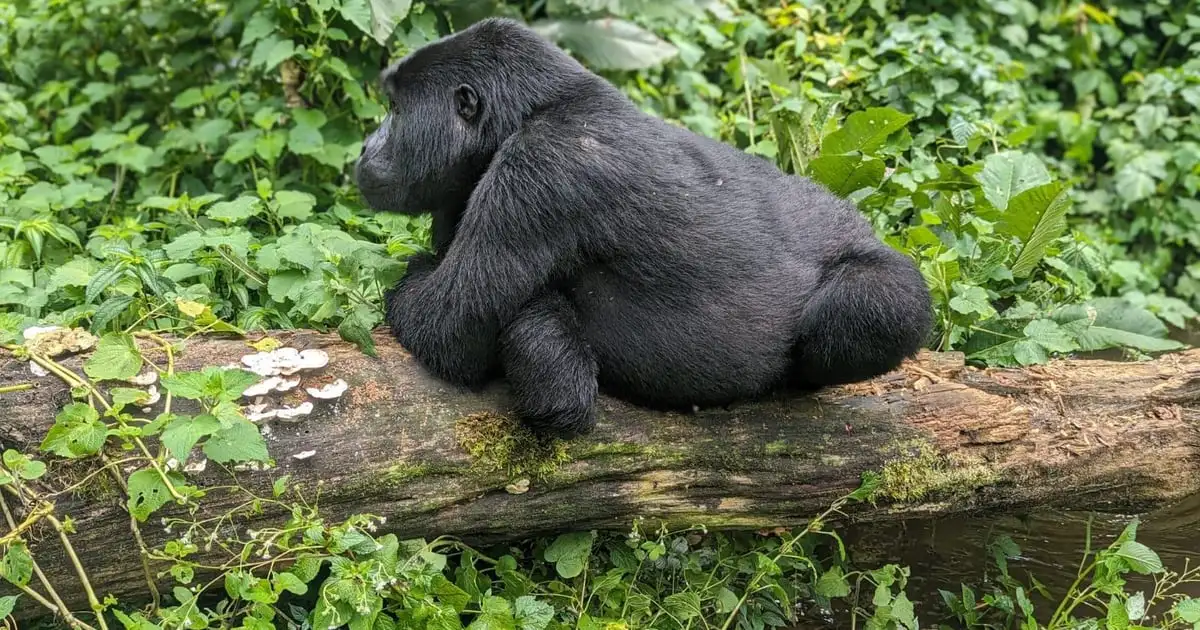
1-Day Bwindi Gorilla Tour from Kigali (Permit Extra)
A 2 am van from Kigali to southern Bwindi, the trek, lunch and the drive back by about 9 pm. Permit and visa extra.
- Cancellation
- Free 24h cancellation
- Operator
- Bugoli Adventures Limited
How does packing change by Bwindi sector and season?
Rainfall ranges from 1,400mm to 2,400mm a year depending on the sector, so wetter trailheads need the fullest rain kit.
Bwindi is reached at four trailheads: Buhoma in the north, Ruhija in the east, and Rushaga and Nkuringo in the south nearest Kisoro. Each sits at a different altitude in a park that spans 1,160m to 2,607m above sea level.
Sector by sector
Buhoma, the park headquarters, sits lower and is often the warmest start, so lighter layers work at the briefing. Ruhija is high and cold at dawn, so a fleece earns its place. Rushaga and Nkuringo in the south combine steep slopes with heavy rain, the case for the strongest boots and full gaiters.
Because Bwindi rainfall ranges from 1,400mm to 2,400mm a year by sector and undergrowth stays wet even on dry days, treat the rain jacket as fixed kit everywhere and vary only your layers.
Seasons
In the drier months the same outfit works with a lighter mid layer. In the wet months add a pack cover, a dry bag for masks and electronics, and a spare pair of socks at the lodge. For month-by-month detail, see the best time for gorilla trekking in Uganda.
Source: Uganda Wildlife Authority.
Should you rent gear instead of buying it?
Rent locally if you will not use the gear again, because boots, gaiters, poles and ponchos can be supplied on request at lodges and through operators.
Lodge and operator supply covers most of the bulky kit, so the only pieces worth buying outright are the ones that touch your skin.
Buy, rent or skip
Buy your own socks, base layers and trousers, since hygiene and fit make them poor rentals. Boots are the judgment call: buy and break them in if you hike at home, otherwise ask about loaner boots. Gaiters, gloves, ponchos, walking sticks and backpacks are widely supplied on request, as lodges such as Wilderness in Rwanda demonstrate with their loaner list.
Ask your tour operator what is included before you buy anything heavy.
| Item | Buy | Rent or borrow | Skip |
|---|---|---|---|
| Boots, broken in | If you hike at home | Ask operator or lodge | |
| Socks and base layers | Always | ||
| Trekking trousers | Always | Denim and cotton | |
| Gaiters | If you will reuse | Often supplied on request | |
| Gloves | Cheap to buy | Often supplied on request | |
| Rain jacket | If you will reuse | Ponchos often supplied | Water-resistant only shells |
| Walking stick | Usually provided or carved locally |
What do trekkers say about what to wear, reddit style?
Trekkers who have been repeat one line: waterproof beats water-resistant, tuck everything, and hire the porter.
First-hand accounts converge on the same three lessons, and they match what the forest demands.
Three lessons from people who went
First, choose waterproof rather than only water-resistant raincoats, after trekkers were blasted by a waterfall in Uganda. Second, tuck everything: leggings under trousers, trousers into socks, socks over the cuffs, because ants need seconds. Third, hire a porter if offered, since many are reformed poachers who rely on trekking income and the UGX 40,000 fee buys both help and goodwill.
Packing Questions Answered
How strenuous is gorilla trekking?
Treks last 2 to 7 hours over steep, muddy ground before your hour with the family, so broken-in waterproof boots and a light pack matter more than any single garment. If the standard trek worries you, a Kigali start shortens the drive, as the 1-day Bwindi gorilla tour from Kigali shows.
What should I wear when gorilla trekking in Rwanda?
The same outfit works in Rwanda's Volcanoes National Park, where trackers gather at Kinigi at 7am. Rwanda's trails are considered more forgiving, but the rain jacket, tall socks and gloves still come. Compare the two countries in Uganda vs Rwanda gorilla trekking.
Has anyone been injured in gorilla trekking?
The main injury risks are slips, stings and scratches, not gorillas, which is exactly why the list insists on boots, gaiters and gloves. Rangers brief you on behaviour and you keep a 10m distance, rules covered in the Uganda gorilla permit guide.
How many face masks should I carry?
Carry at least two, one worn when you reach the gorillas and a spare in a pocket, kept dry in a zip-lock bag inside your daypack.
Can I wear contacts or glasses on the trek?
Contact lenses beat glasses that mist up in the humidity, so wear contacts and pack glasses as backup with a cleaning cloth.
What else should I budget beyond clothes?
Plan for a single-entry Uganda tourist visa at $50 applied for online, the $800 gorilla permit and UGX 40,000 for a porter if you hire one, all set out on the costs page.
More Guides
- Best Time for Gorilla Trekking in Uganda: Month by Month
Gorilla trekking in Uganda is best from June to September in 2027, with 27°C highs and drier trails. April and May bring quieter forests.
- Uganda Gorilla Trekking Permit: Price, Booking and Rules
The Uganda gorilla trekking permit costs $800, or $600 in April, May and November. Who can book it, what it covers and the 2027 rule changes.
- Bwindi Gorilla Trekking: Sectors, Groups and How a Trek Works
A Bwindi gorilla permit costs $800 in 2027 and buys a guided hike to one hour with a habituated family. Compare tours and check dates.