 UgandaGorillaTrekking.tours
Home › Guides › Is Gorilla Trekking Worth It? Costs, Effort and Who It Suits
Is Gorilla Trekking Worth It? Costs, Effort and Who It Suits
Is Gorilla Trekking Worth It? For most travellers who can walk a steep forest trail, yes. A Uganda permit costs $800 and buys a guaranteed encounter with a habituated mountain gorilla family, in a country where almost half the world's surviving mountain gorillas live.
Quick answer Yes, gorilla trekking is worth the money for most travellers
Yes, for most travellers gorilla trekking is worth the money. A Uganda permit costs $800 per person, against $1,500 in Rwanda, and the hour with a habituated gorilla family is described by almost everyone who does it as the wildlife encounter of a lifetime. The cost also funds conservation: mountain gorillas have recovered from around 240 in the 1980s to more than 1000 today.
Key takeaways
- Compare Uganda and Rwanda prices on the uganda gorilla trekking homepage
- Short on time? A 1-Day Bwindi Gorilla Tour from Kigali keeps costs down
- Want the permit and everything else handled? See the 2-Day Uganda Gorilla Trek in Bwindi from Kigali, Permit Included
- Want more than one hour? Consider the 4-Day Double Mountain Gorilla Trekking Safari in Bwindi
Is gorilla trekking worth the money?
Yes, if you value a rare wildlife encounter you cannot buy anywhere else and you go in knowing exactly what the money buys.
The honest answer is that the money buys three things at once, and each one on its own justifies a large slice of the fee.
What you actually get for the permit
You get a guaranteed sighting of a fully habituated mountain gorilla family, reached on foot with armed rangers and trackers who locate the group before you set out. Rwanda's rangers know where each habituated group is every single day, so nobody goes home empty handed. Trekking groups are limited to eight people and the visit is strictly limited to one hour. Forum respondents who did a one-day trek describe it as an amazing experience and say the cost is worth it.
That hour is not a zoo visit. The family moves, feeds, grooms and plays around you while you crouch a few metres away. Travellers who have done both a cheap day trip and an expensive lodge trip tend to give the same verdict: the gorillas are the thing, and the hour is worth the fee.
| What you get | What it takes |
|---|---|
| A guaranteed hour with a habituated gorilla family | An $800 permit in Uganda, $1,500 in Rwanda |
| Rangers, trackers and guides who locate the group for you | A 7:00 am arrival at park headquarters with your passport |
| Groups of only eight visitors per gorilla family | Booking 3 to 6 months ahead, up to a year for dry season |
| Conservation that has grown the population past 1000 | A hike of uncertain length on steep, muddy forest trails |
| Money that reaches local communities | A willingness to wear a mask and follow strict rules |
What the money funds
Permit costs go directly toward gorilla conservation and supporting local communities. In Rwanda the revenue split sends 15% back to nearby communities, 10% to development and 5% as monetary transfers. This matters to the verdict.
The population fell to around 240 mountain gorillas in the 1980s and now numbers more than 1000, and tourism revenue is a central reason why. Paying the fee is not just buying a photo opportunity, it is paying for the species to keep existing.
| Where the permit money goes | Share |
|---|---|
| Nearby communities | 15% |
| Development | 10% |
| Monetary transfers to local people | 5% |
| Gorilla conservation and park operations | The remainder |
What travellers say afterwards
The pattern in traveller reviews is remarkably consistent. People who agonised over the price before going describe the hour with the gorillas as the highlight of their trip and say they would pay again. The one recurring caveat is that you should understand the format before you book: one hour, eight people, strict rules and a real hike to reach the family.
Travellers who know that going in report no disappointment.
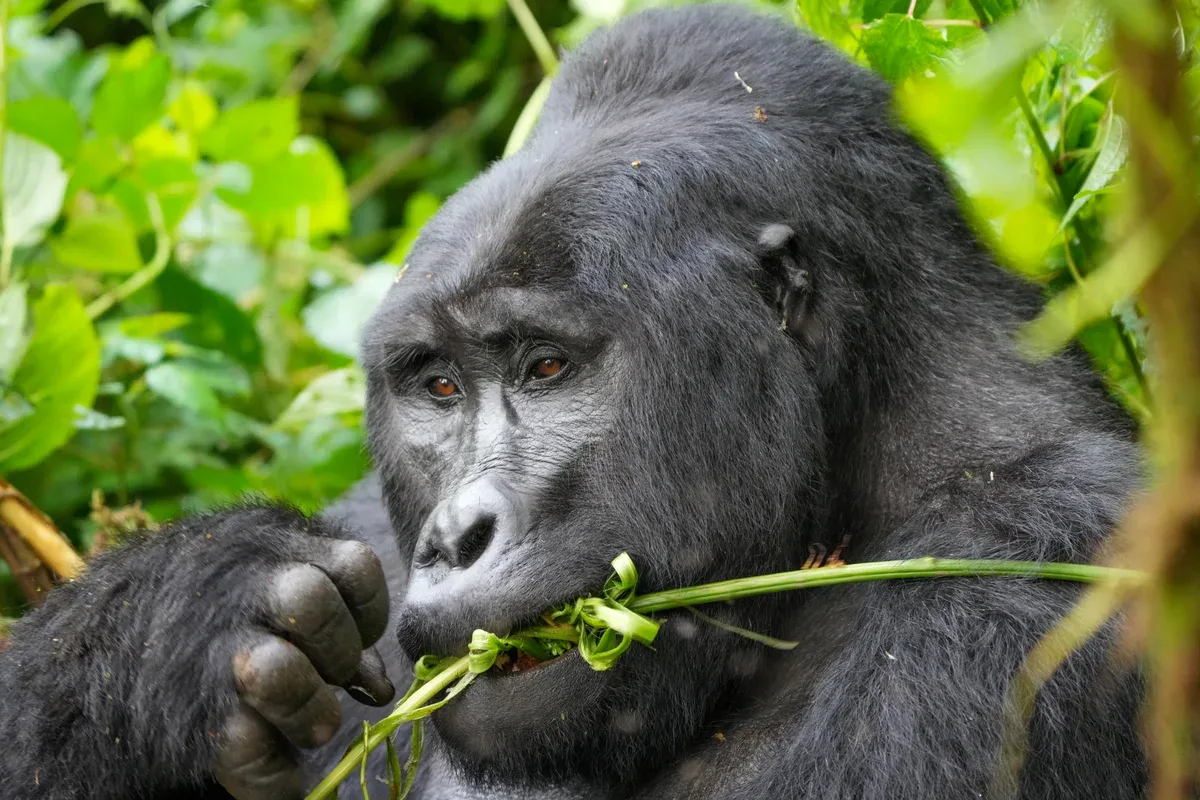
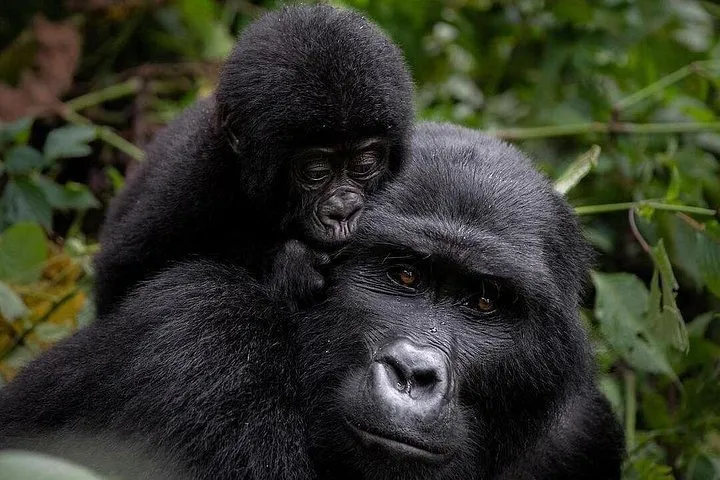
A silverback feeding in Bwindi. Photo: Giles Laurent, CC BY-SA 4.0, via Wikimedia Commons.
Is it better to do gorilla trekking in Rwanda or Uganda?
Uganda gives you the same gorilla hour for $800 instead of Rwanda's $1,500, while Rwanda is easier to reach in a day from Kigali.
The core difference is price. Uganda charges $800 for foreign non-residents, and Rwanda charges $1,500. Beyond the permit, the countries differ in gorilla numbers, travel time and trip shape.
The price gap
A Rwanda permit costs $1,500 versus Uganda's $800, and travellers repeatedly cite cost as the primary reason they choose Uganda. Uganda also has cheaper tiers: US$700 for foreign residents, US$500 for visitors from the rest of Africa and UGX 300,000 for East African citizens, according to the Uganda Wildlife Authority rates. Rwanda issues 96 permits a day across its park, eight per gorilla group, with a minimum age of 15.
| Permit | Price |
|---|---|
| Uganda, Bwindi or Mgahinga, foreign non-resident | $800 |
| Uganda, foreign resident | $700 |
| Uganda, rest of Africa | $500 |
| Uganda, East African citizen | UGX 300,000 |
| Uganda, gorilla habituation experience, to the end of 2026 | $1,500 |
| Rwanda, Volcanoes National Park | $1,500 |
Gorilla numbers and choice of families
Bwindi protects approximately 459 mountain gorillas, almost half of the world's remaining population, and has 25 habituated gorilla groups. That gives Uganda far more choice of families and trekking start points than Mgahinga, which has just one habituated family, or Rwanda's smaller roster. Uganda is the clear pick if you want options and a lower price.
Rwanda makes sense if you are short on days, because the Kigali to Bwindi drive takes at least 4 hours each way while Volcanoes National Park sits close to Kigali.
| Feature | Uganda | Rwanda |
|---|---|---|
| Permit | $800 | $1,500 |
| Wild gorillas | About 459 in Bwindi alone | Not stated |
| Habituated families | 25 in Bwindi | Not stated |
| Drive from the nearest airport city | At least 4 hours from Kigali | Under an hour from Kigali to Volcanoes |
| Best for | Budget, choice of families | Speed and short trips |
What a full trip really costs
The permit is only part of the bill. A 3-day Bwindi tour with permit, two nights of accommodation, food, transport and a guide costs from $2,800 per person. On top of that, a single-entry Uganda tourist visa costs US$50, applied for online.
Budget tours exist: some 3-day Bwindi trips sell for $503 per person with the permit extra, and day trips from Kigali start at $300 per person before the $800 permit. Add your international flights and tips and a realistic all-in figure for most visitors lands well above the permit price alone.
| Cost item | Typical figure |
|---|---|
| Uganda permit | $800 |
| Full 3-day Bwindi tour with permit, lodging, food and transport | From $2,800 |
| Uganda tourist visa, single entry | $50 |
| Rwanda permit for comparison | $1,500 |
When to go and how far ahead to book
Best months are June to September and December to February, when trails are drier. Book permits 3 to 6 months ahead, and dry-season reservations can require a year's lead time. If you have fixed dates, book the permit first and build the trip around it.
Our 5-Day Gorilla and Chimpanzee Trekking in Uganda: Kibale, Bwindi and Lake Bunyonyi pairs gorillas with chimps if you want more from one trip.
Sources: Uganda Wildlife Authority, Visit Rwanda, Uganda Immigration.
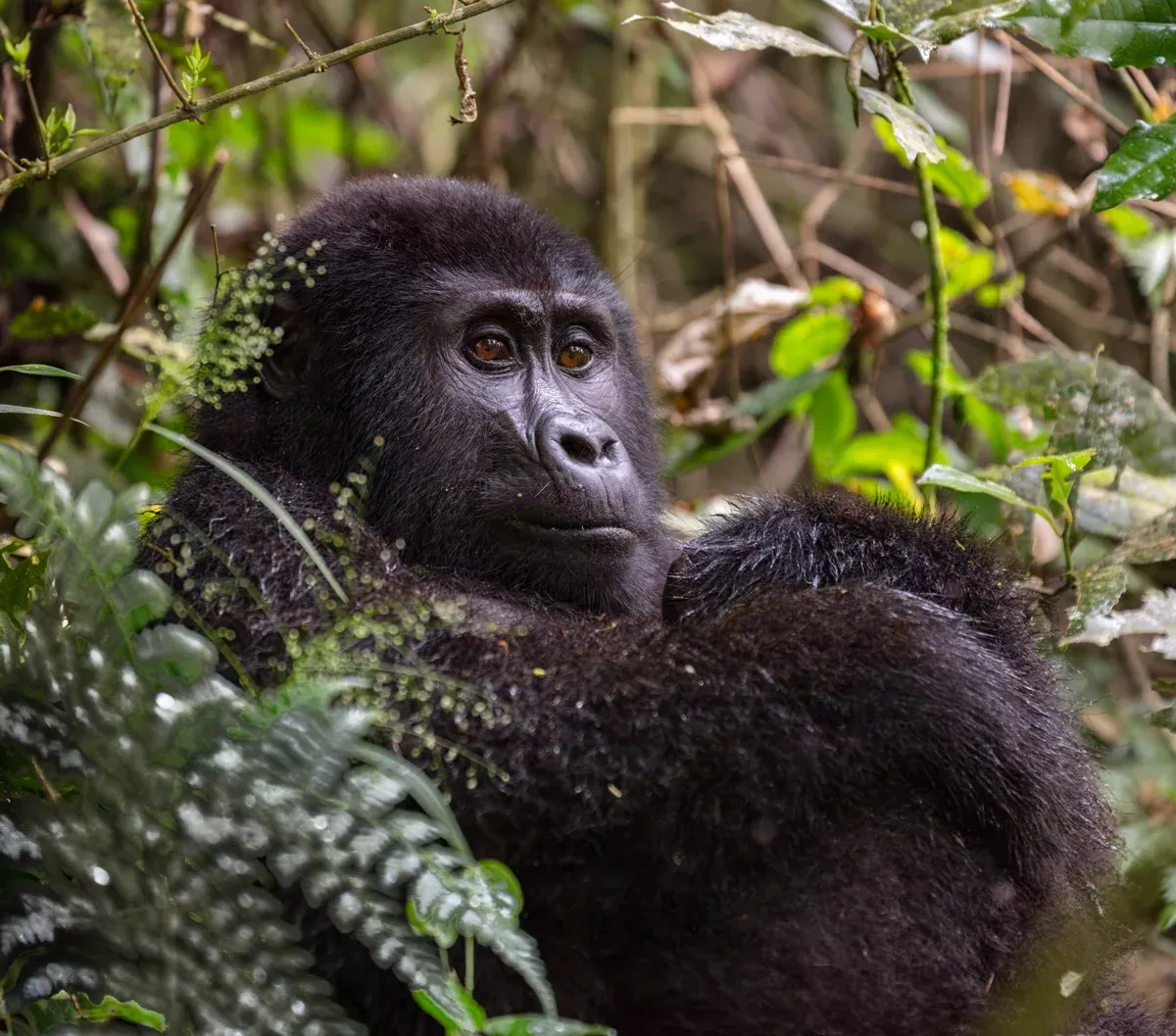
A mountain gorilla resting in Bwindi. Photo: Diego Delso, CC BY-SA 4.0, via Wikimedia Commons.
Tours That Fit
Three trips that answer the value question in different ways, from a cheap day trek to an all-inclusive short safari.
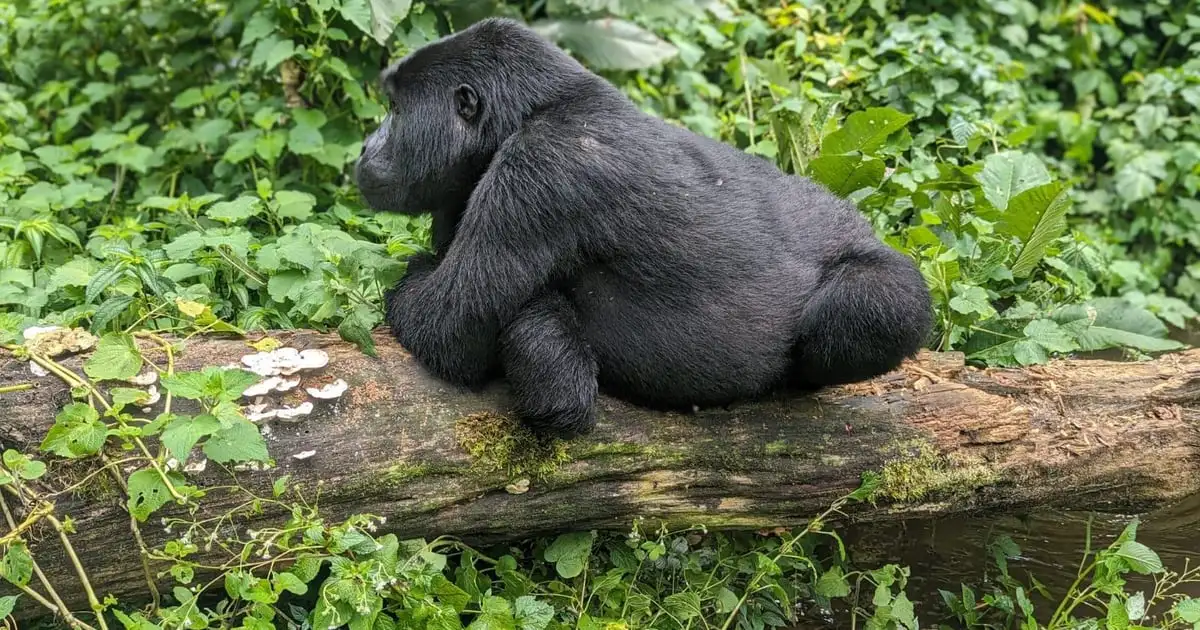
1-Day Bwindi Gorilla Tour from Kigali (Permit Extra)
A 2 am van from Kigali to southern Bwindi, the trek, lunch and the drive back by about 9 pm. Permit and visa extra.
- Cancellation
- Free 24h cancellation
- Operator
- Bugoli Adventures Limited
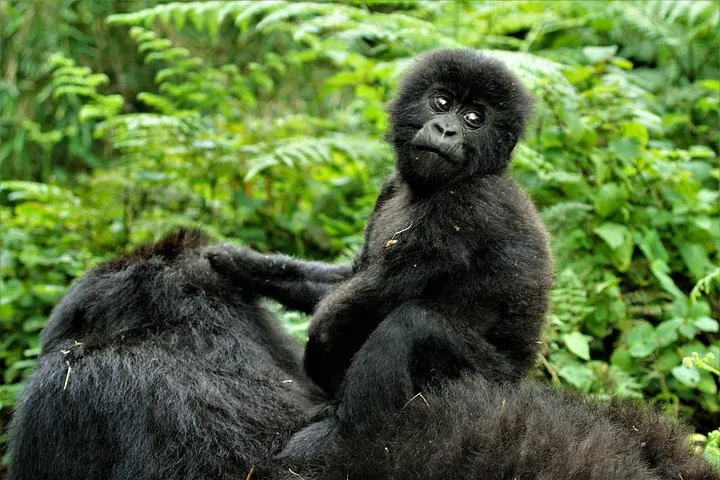
2-Day Uganda Gorilla Trek in Bwindi from Kigali, Permit Included
Two days from Kigali with the Genocide Memorial, a night at Rushaga and the Bwindi gorilla trek. Permit and meals included.
- Cancellation
- Non-refundable
- Operator
- Rwanda Eco Company and Safaris
3-Day Bwindi Gorilla Trek with the Batwa Trail and a Lake Bunyonyi Canoe Ride
Three days from Entebbe: the Batwa trail, a Bwindi gorilla trek and a canoe ride on Lake Bunyonyi. Permit, lodges and meals included.
- Cancellation
- Free 24h cancellation
- Operator
- Dav Safaris
How difficult is gorilla trekking really?
It is a real hike on steep, muddy mountain trails of unpredictable length, but groups are matched by fitness level and porters help.
Difficulty is the biggest worry for most first-timers and the one thing operators undersell. Here is the candid picture.
The honest difficulty picture
There is no fixed distance. You walk until the trackers find your family, which can mean a short stroll or hours on steep, wet ground. The good news is that treks are organised by fitness level, guides offer frequent stops, and porters can assist with backpacks.
On one Bwindi trek most trekkers were over 50 years old, which tells you the bar is lower than the word trekking suggests. If you can walk uphill for a few hours with breaks, you can do this.
| Difficulty factor | Reality |
|---|---|
| Trail condition | Steep, often muddy forest paths |
| Hike length | Unpredictable, depends where the family is |
| Pace | Matched to your fitness group |
| Help available | Frequent stops and porters for backpacks |
| Typical trekkers | Plenty over 50 on a Bwindi trek |
How to make it easier on yourself
Ask for a family assigned to a closer start point when you register in the morning. Hire a porter even if you feel strong, because the money supports local families and the pull on steep sections is real. Wear proper boots, long trousers and gloves for the vegetation, and bring rain protection whatever the forecast.
Stay near the park headquarters the night before, because mornings start early: park headquarters arrival is at 7:00 am with passports checked.
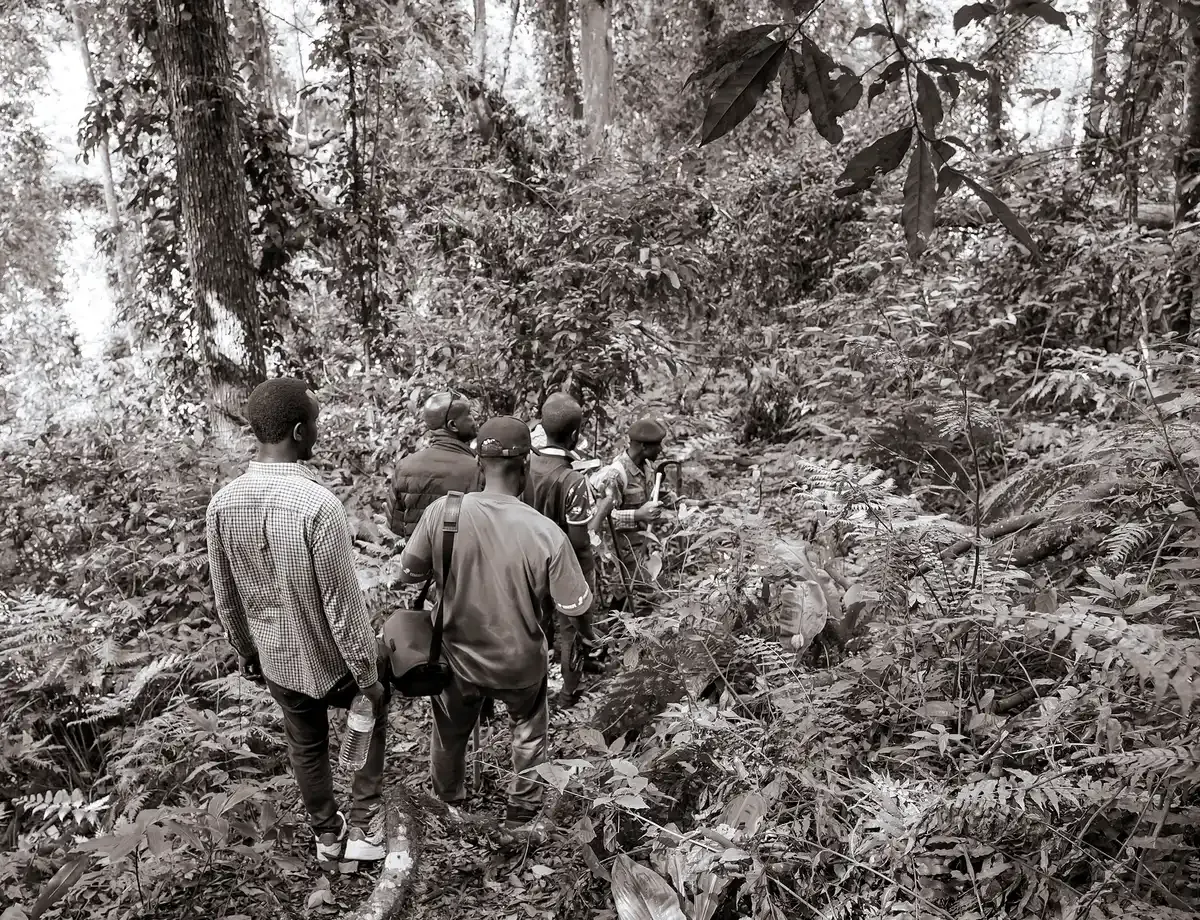
Visitors on a forest trail in Mgahinga. Photo: Happyartst, CC BY-SA 4.0, via Wikimedia Commons.
Who will love gorilla trekking, and who should skip it?
It suits almost any reasonably fit adult who cares about wildlife, and it is the wrong trip for anyone who wants a guaranteed easy, long or privately-timed animal encounter.
The verdict changes depending on who you are. Here is the candid fit profile.
Who will love it
Wildlife lovers who have done safaris and want something rarer. Anyone moved by the conservation story, because your fee directly protects a species that numbered around 240 in the 1980s and now numbers more than 1000. Travellers over 50 form a large share of trekkers, and groups are matched by fitness level, so age is not a barrier.
Photographers get close, stable subjects, though forest light is dim so bring what you can handle. Budget travellers do well in Uganda, where permits and full tours cost far less than Rwanda, and trips like the 3-Day Uganda Gorilla Trek and Batwa Experience from Entebbe or Kampala bundle everything.
Who should skip it and what to do instead
Skip it if you cannot walk on steep, wet ground for hours, or if an unpredictable hike with an early start sounds like a hardship rather than an adventure. Skip it if the strict one-hour limit and eight-person group will feel like a rip-off to you, because the rules will not bend. If Uganda's forests appeal but gorillas are not essential, golden monkey trekking in Mgahinga is a cheaper walk in the same volcanoes, and the 3-Day Gorilla and Golden Monkey Trek in Mgahinga, Uganda, from Kigali covers both.
If you want the deepest possible gorilla time, the gorilla habituation experience costs $1,500 for foreign non-residents until the end of 2026, and the Private 5-Day Gorilla and Chimpanzee Habituation Experience in Uganda is built around it.
| Traveller type | Verdict |
|---|---|
| Wildlife and conservation lovers | Absolutely worth it |
| Moderately fit travellers over 50 | Worth it, groups match fitness |
| Budget travellers | Worth it in Uganda at $800 |
| Anyone with limited mobility | Skip, or ask about closer families |
| Travellers wanting hours with gorillas | Consider the habituation experience instead |
| Very tight schedules | A day trip from Kigali makes it possible |
Where to stay for the trek
Stay as close to the park headquarters as you can, because mornings start early and a long pre-dawn drive adds misery to the day. Travellers in Rwanda recommend Kinigi Cottage near the Volcanoes headquarters, or Five Volcanoes Boutique Hotel, and booking a guide to drive you to the trek start. In Uganda the same logic applies around Bwindi's four sector trailheads.
Source: Uganda Wildlife Authority.
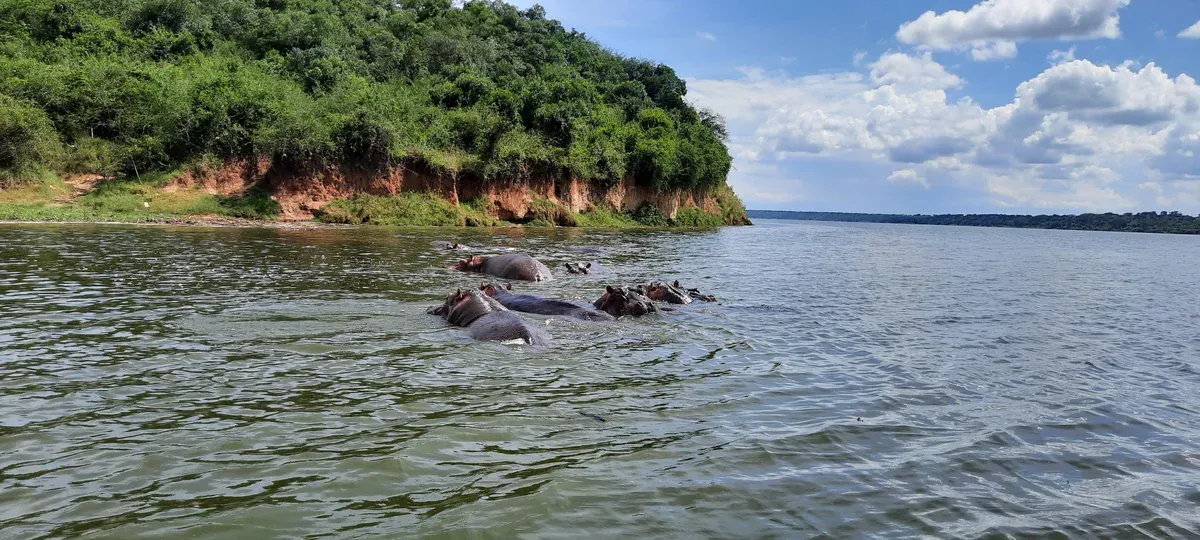
Hippos in the Kazinga Channel. Photo: Jchambacha, CC BY-SA 4.0, via Wikimedia Commons.
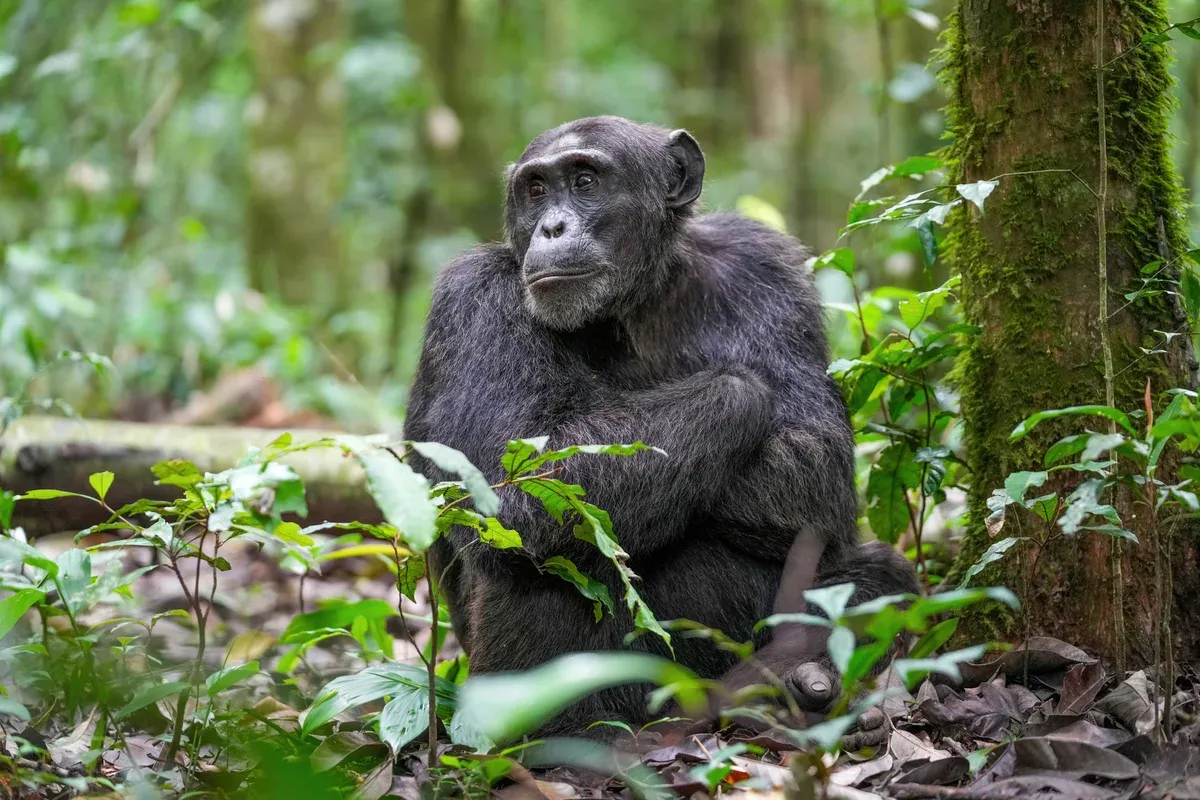
An alpha male chimpanzee in Kibale. Photo: Giles Laurent, CC BY-SA 4.0, via Wikimedia Commons.
Is gorilla trekking dangerous?
No, it is one of the safest wildlife activities in Africa, with habituated families, armed rangers and strict rules.
Safety worries show up in almost every search around this trip, so here is the straight answer.
Are mountain gorillas dangerous?
The gorillas you visit are fully habituated, meaning they have spent years becoming calm around humans. Volcanoes National Park is described as extremely well organised with fully habituated families, and rangers enforce a distance and set rules for your behaviour. A ranger on one trek carried a gun only in case the group met an elephant or buffalo in the forest, not because of danger from humans or gorillas.
Injuries to visitors are rare and the record of the habituation programs is long and clean.
| Perceived risk | Actual situation |
|---|---|
| Gorillas attacking | Very unlikely, families are fully habituated |
| Rangers carry weapons | Only for possible elephant or buffalo encounters |
| Getting lost | Trackers and armed rangers accompany every group |
| Illness passing to gorillas | Managed, masks are required for all visitors |
Is Uganda safe for gorilla trekking?
The trekking itself is tightly controlled and escorted. Rwanda is widely regarded as one of Africa's safest countries and the gorilla regions of Uganda are established tourist areas with a heavy ranger presence. Standard city caution applies in Kampala or Kigali, but the forest trek is not where the risk lies.
Practical safeguards: masks are still required for all visitors to gorillas, a rule continued after researchers noticed gorillas got sick less when humans wore masks, and you register at 7:00 am with your passport before setting out.
How do you get the most from one gorilla trek?
Book early, stay close to the trailhead, hire a porter and treat the hour as a privilege rather than a photo shoot.
A few choices made before the trek change how good the day feels.
Book early and stay close
Permits should be booked 3 to 6 months ahead, and dry-season reservations can require a year's lead time. Choose the drier months of June to September or December to February when trails are firmer. Sleep near the trailhead the night before so the 7:00 am registration is a short walk, not a long drive.
If you are flying into Kigali, the 2-Day Uganda Gorilla Trek in Bwindi from Kigali, Permit Included is the shortest sensible overnight format.
On the day
Hire a porter and accept the frequent stops your guide offers. Pack long trousers, gloves, boots and rain gear, and keep a mask accessible since it is required at the gorillas. Once you reach the family, put the camera down for stretches and just watch.
The families have personalities, and the hour passes faster than any other hour of a Uganda trip. Travellers who want a second family or a second day rate the double trek as the best value upgrade, and the 4-Day Double Mountain Gorilla Trekking Safari in Bwindi is built for exactly that.
| Tip | Why it helps |
|---|---|
| Book 3 to 6 months ahead | Dry season permits can need a year's lead time |
| Travel June to September or December to February | Drier trails, easier hiking |
| Sleep near the trailhead | Registration is at 7:00 am with passports checked |
| Hire a porter | Carries your pack and supports a local family |
| Wear boots, long trousers and gloves | Forest vegetation is sharp and the ground is wet |
| Consider a second trek | One hour goes fast, a double trek doubles the value |
Questions Travellers Ask
What is gorilla trekking?
It is a guided hike into Bwindi, Mgahinga or Volcanoes National Park to spend a strictly limited one-hour visit with a habituated mountain gorilla family, in groups of no more than eight visitors with rangers and trackers.
Are you guaranteed to see gorillas?
In practice yes, because rangers know where each habituated group is located every single day before your trek begins, so visitors find the family.
How difficult is gorilla trekking really?
Expect hours on steep, muddy mountain trails of unpredictable length, but treks are organised by fitness level, guides offer frequent stops and porters can carry your backpack.
Has anyone been injured in gorilla trekking?
Serious injuries are rare and not stated in the accounts we reviewed in preparation, and the families you visit are fully habituated with armed rangers present mainly for possible elephant or buffalo encounters.
Is gorilla trekking ethical?
Yes, it is one of conservation's clearest success stories: permit money funds protection and local communities, and mountain gorillas have grown from around 240 in the 1980s to more than 1000, with Bwindi alone sheltering about 459.
What is the cheapest gorilla trek?
The cheapest format is a 1-day trek from Kigali, such as the 1-Day Bwindi Gorilla Tour from Kigali at $300 per person, plus the $800 Uganda permit.
Should you tip your guides, porters and trackers?
Tipping is customary and expected across Uganda and Rwanda, and a specific rate is not stated, so bring small bills and tip your guide, porters and trackers directly after the trek.
Is gorilla trekking worth it reddit?
Travellers on forums and review sites overwhelmingly say yes, describing the hour with the family as an amazing experience worth the cost, with the main caveat being to understand the one-hour format before you book.
More Guides
- Gorilla Trekking in Uganda from Kigali: Routes, Border and Timing
Kigali reaches Bwindi in 3 to 4 hours via the Cyanika border. One-day treks in 2027 start at $300 plus the $800 permit. Compare tours.
- What to Wear for Gorilla Trekking: Uganda Packing List
Treks run 2 to 7 hours, so wear quick-dry trousers, waterproof boots and tall socks. The full outfit for 2027, then compare tours.
- Best Time for Gorilla Trekking in Uganda: Month by Month
Gorilla trekking in Uganda is best from June to September in 2027, with 27°C highs and drier trails. April and May bring quieter forests.