 UgandaGorillaTrekking.tours
Home › Guides › Bwindi Gorilla Trekking: Sectors, Groups and How a Trek Works
Bwindi Gorilla Trekking: Sectors, Groups and How a Trek Works
Bwindi Gorilla Trekking is a guided hike through Impenetrable Forest to spend one hour with a habituated mountain gorilla family. A permit costs $800 for foreign non-residents and the park protects around 459 gorillas.
Quick answer Bwindi gorilla trekking in brief
A gorilla permit costs $800 for foreign non-residents and buys a guided hike of three hours or more each way, ending with up to one hour with a habituated gorilla family. Trekkers must be 15 or older and walk in groups of up to eight visitors.
Key takeaways
- Compare every route on the uganda gorilla trekking homepage.
- Short on time? See the 1-Day Bwindi Gorilla Tour from Kigali.
- Classic option: the 3-Day Bwindi Gorilla Trek with the Batwa Trail and a Lake Bunyonyi Canoe Ride.
- Two treks in one trip: the 4-Day Double Mountain Gorilla Trekking Safari in Bwindi.
What actually happens on a Bwindi gorilla trek?
A Bwindi gorilla trek is a guided hike on foot, not a drive, that ends with up to one hour watching a habituated gorilla family.
Bwindi Impenetrable National Park is a UNESCO World Heritage Site between 1,160 and 2,6010 metres (32.8 ft), over 25,000 years old. The forest holds more than 120 mammal species, 350 bird species and around 460 mountain gorillas across more than 20 habituated families. A trek is a walk through this forest with rangers and trackers who find the gorillas by following trails from where the family nested the night before.
Why Bwindi is different
Bwindi protects approximately 459 mountain gorillas, almost half of the world's remaining population. It has 25 habituated gorilla groups, and the Mubare group was the first habituated for tourism in Uganda, in April 1993.
Trekking runs all year round. Each gorilla group is visited by only eight people per day, so permits are limited and booking three to six months ahead is recommended for the June to September and December to February dry seasons.
Source: Uganda Wildlife Authority.
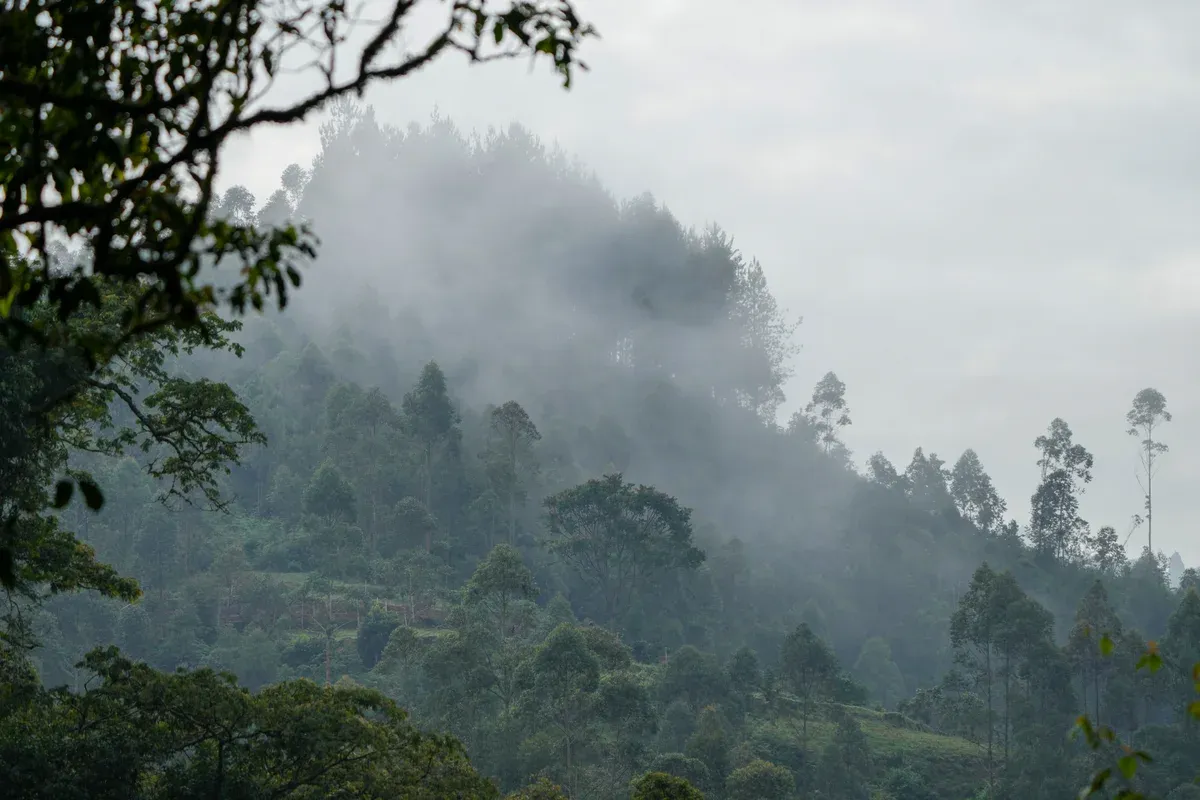
Morning mist over the ridges of Bwindi. Photo: Giles Laurent, CC BY-SA 4.0, via Wikimedia Commons.
How much is gorilla trekking in Bwindi?
The gorilla permit costs $800 for foreign non-residents, $700 for foreign residents, $500 for visitors from the rest of Africa and UGX 300,000 for East African citizens.
The permit is the biggest single cost of the trip. Everything else depends on how you travel and where you stay.
What the permit price includes
According to the Uganda Wildlife Authority, the permit price includes the guide fee, park entrance for the day and the community development contribution. The habituation experience in Rushaga costs $1,500 and gives up to four hours with a family instead of one.
For context, a gorilla tracking permit in Rwanda's Volcanoes National Park costs $1,500 per person, so Uganda is the cheaper option for most travellers. Park entry for Bwindi and Mgahinga is $40 a day for foreign non-residents, which is already covered inside the gorilla permit on the tracking day.
Our own tours are priced separately: a full 3-day budget trek from Entebbe or Kigali starts at $503 per person with the permit extra.
Permit rules at a glance
| Rule | Detail |
|---|---|
| Foreign non-resident permit | $800 |
| Foreign resident permit | $700 |
| Rest of Africa permit | $500 |
| East African citizen permit | UGX 300,000 |
| Habituation experience | $1,500, up to 4 hours |
| Visitors per gorilla group per day | 8 |
| Time with the gorillas | 1 hour |
Sources: Uganda Wildlife Authority, Visit Rwanda, Uganda Wildlife Authority.
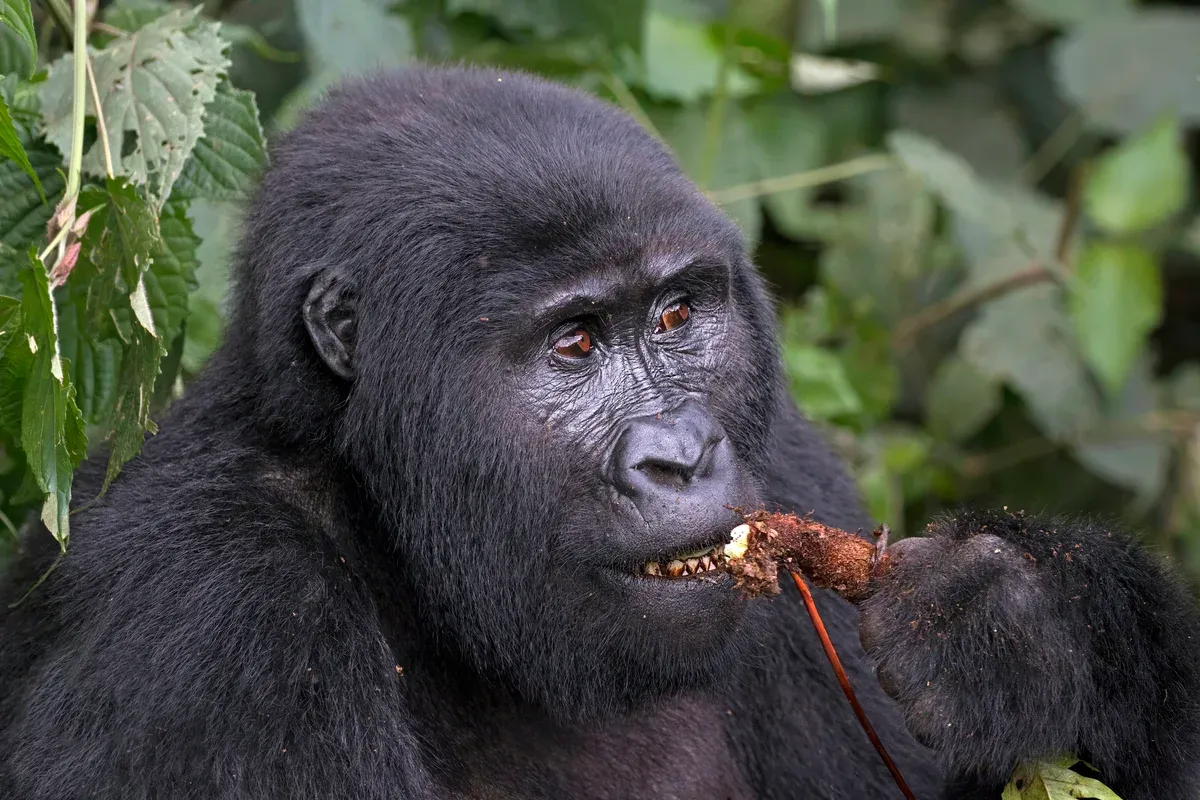
A female of the Mubare group in Buhoma eating a root. Photo: Charles J. Sharp, CC BY-SA 4.0, via Wikimedia Commons.
What is the best sector in Bwindi for gorilla trekking?
There is no single best sector, because Bwindi's four sectors suit different travellers, from first-timers at Buhoma to fit hikers at Nkuringo.
Bwindi has four sectors: Buhoma and Ruhija in the north and east, Rushaga and Nkuringo in the south. Your permit is valid for one sector, so choose it before you book.
The four sectors compared
Buhoma is the original sector, opened to tourism in 1993, with families such as Mubare, Rushegura, Habinyanja and Katwe. Ruhija is the highest sector at around 2,350 metres, with Bitukura and Oruzogo families and a chance of seeing the African green broadbill. Rushaga has the highest number of habituated gorilla families open to trekkers and is the only sector offering the habituation experience. Nkuringo is the most physically challenging sector, with treks starting in a steep descent and ending in a climb.
Lodges in Nkuringo include Nkuringo Bwindi Gorilla Lodge, Clouds Mountain Gorilla Lodge and Gorilla Heights Lodge.
| Traveller type | Best sector | Why |
|---|---|---|
| First-timer | Buhoma | Original sector since 1993, families like Mubare and Rushegura |
| Birder | Ruhija | Highest sector at around 2,350 metres, chance of the African green broadbill |
| Longer time with gorillas | Rushaga | Most habituated families and the only habituation experience, up to 4 hours |
| Fit hiker | Nkuringo | Most challenging treks, steep descent in and climb out |
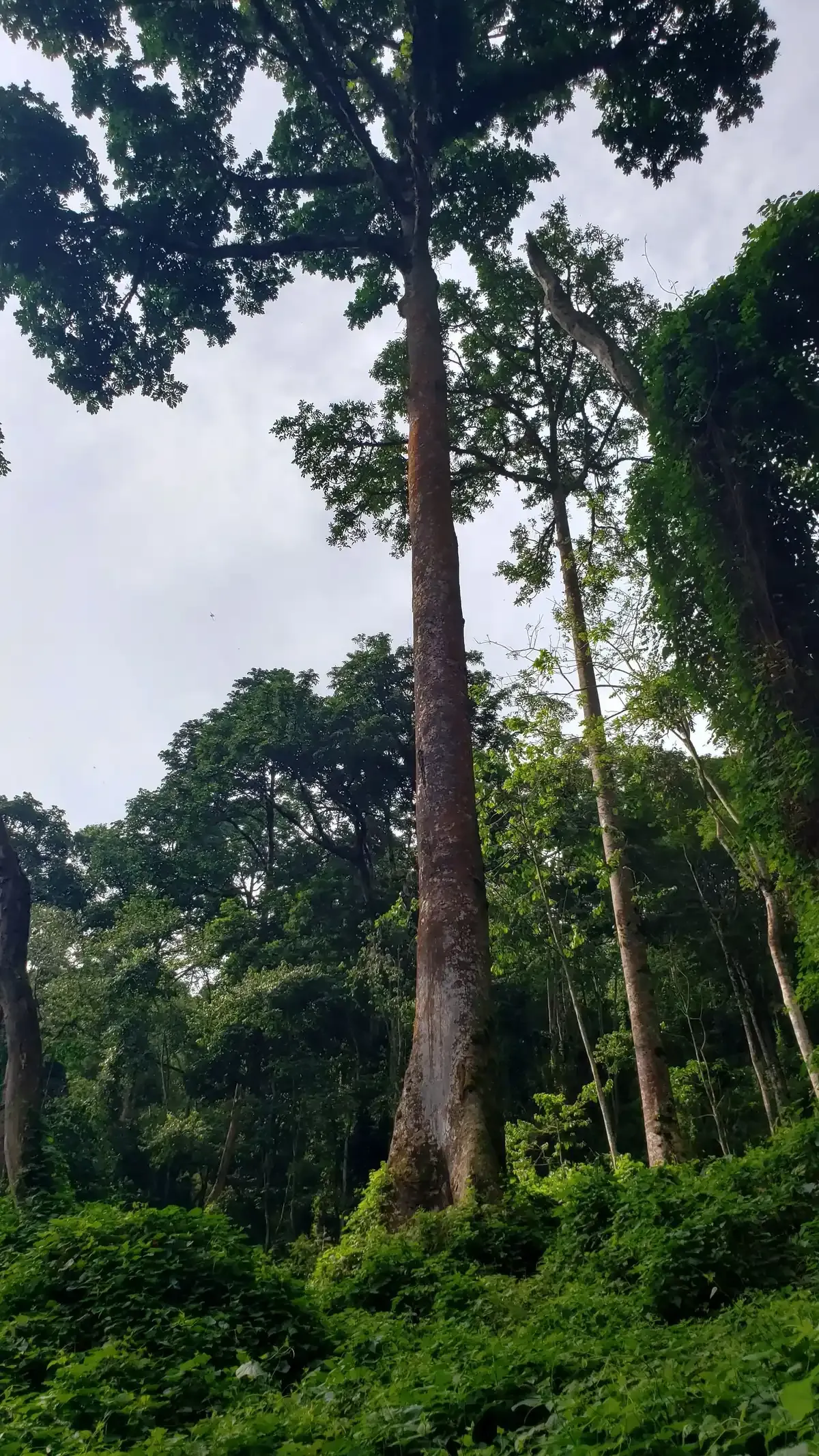
The tall trees of Bwindi. Photo: Ugpics, CC BY-SA 4.0, via Wikimedia Commons.
Tours That Fit
Permits, transport and guides handled for you on these Bwindi trips.
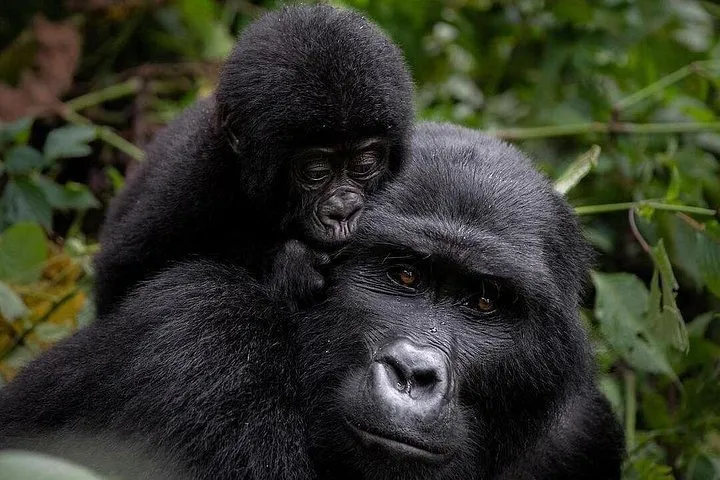
3-Day Bwindi Gorilla Trek with the Batwa Trail and a Lake Bunyonyi Canoe Ride
Three days from Entebbe: the Batwa trail, a Bwindi gorilla trek and a canoe ride on Lake Bunyonyi. Permit, lodges and meals included.
- Cancellation
- Free 24h cancellation
- Operator
- Dav Safaris
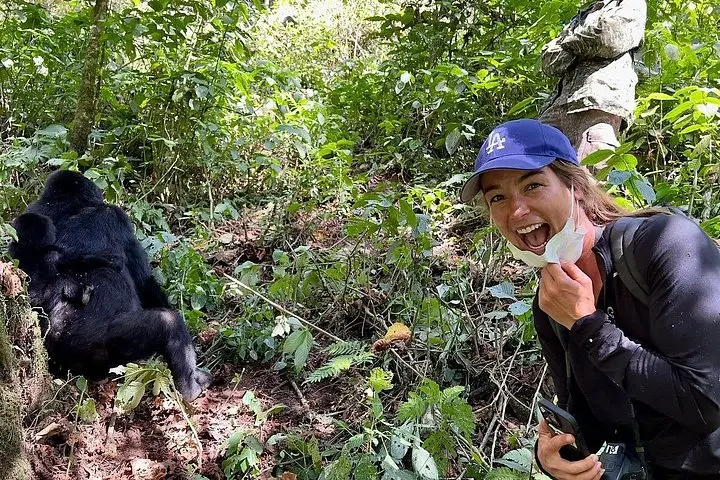
3-Day Uganda Gorilla Trek and Batwa Experience from Entebbe or Kampala
Private 3-day trip from Entebbe or Kampala to the Rushaga sector of Bwindi with the $800 permit, two nights and all meals.
- Cancellation
- Full refund 6+ days out
- Operator
- Eco Adventure Safaris
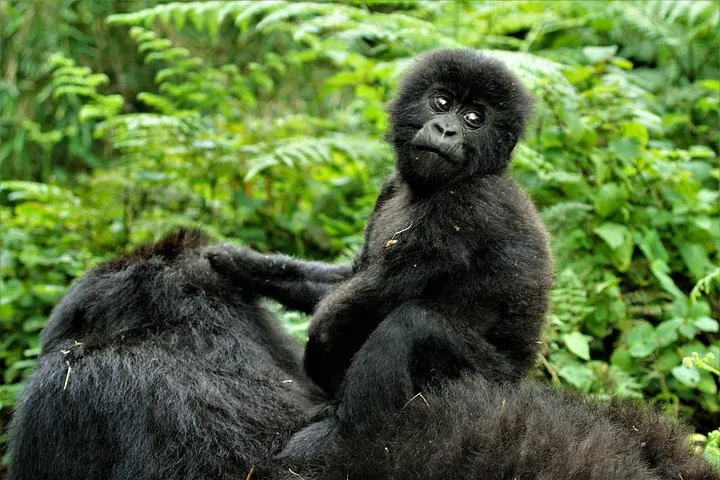
2-Day Uganda Gorilla Trek in Bwindi from Kigali, Permit Included
Two days from Kigali with the Genocide Memorial, a night at Rushaga and the Bwindi gorilla trek. Permit and meals included.
- Cancellation
- Non-refundable
- Operator
- Rwanda Eco Company and Safaris
What does a typical trek day in Bwindi look like?
Trek day starts with an early briefing at the sector headquarters, followed by a hike of at least three hours each way and up to one hour with the gorillas.
The day is structured the same way in every sector, only the terrain and hiking time change.
From dawn briefing to the hour with the family
You report to the park headquarters in the morning for a briefing from the rangers. You are then assigned to a gorilla family and set off on foot with an armed ranger and trackers, in a group of up to eight visitors. One trekker reports planning for at least a 3 hour hike one way.
When the trackers find the family, you are given up to one hour with the gorillas. You then hike back to the trailhead. The full day commonly runs from early morning to mid or late afternoon, depending on where the family is.
Source: Uganda Wildlife Authority.
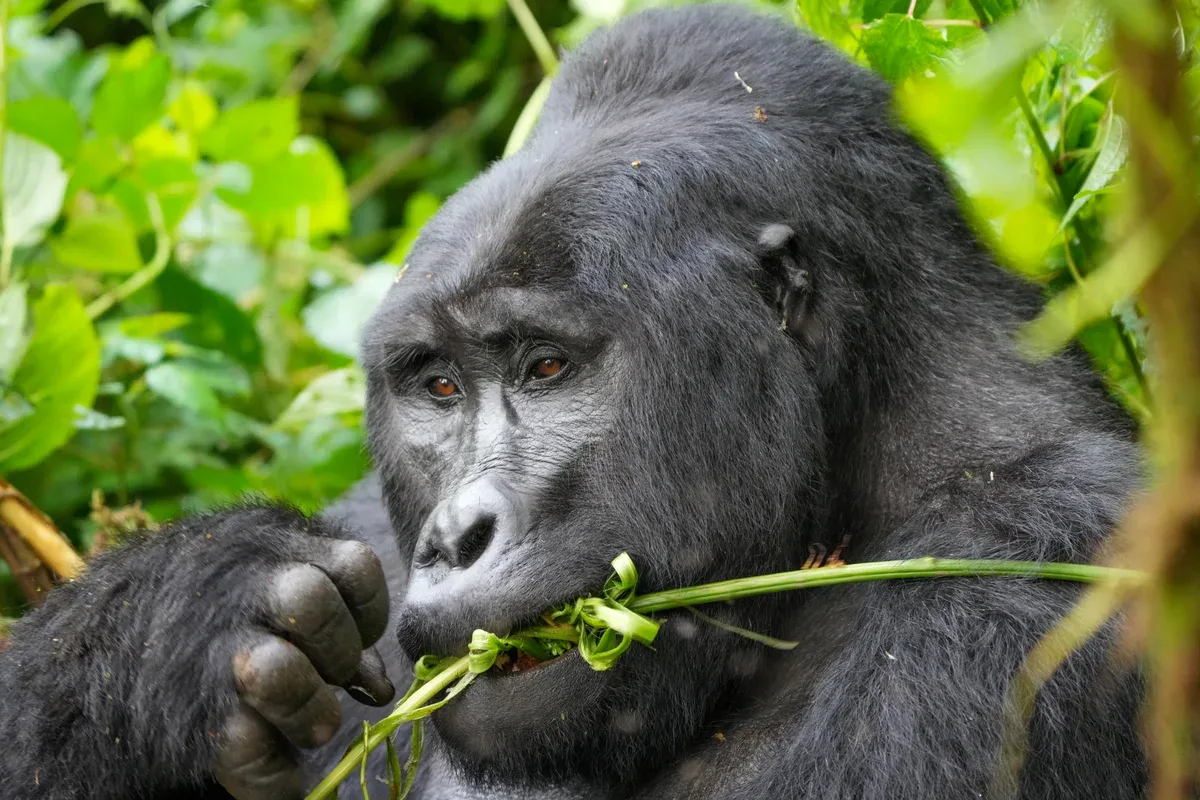
A silverback feeding in Bwindi. Photo: Giles Laurent, CC BY-SA 4.0, via Wikimedia Commons.
How hard is gorilla trekking in Bwindi?
Bwindi trekking is very physically demanding, with at least a 3 hour hike one way through steep forest, and Nkuringo is the hardest sector.
Difficulty depends on which family you are assigned and which sector your permit covers.
Fitness, altitude and terrain
The forest sits between 1,160 and 2,6010 metres (32.8 ft), so you feel the altitude as well as the slopes. Trails are muddy and steep. Plan for at least a 3 hour hike one way.
Sector choice makes a real difference. Ruhija is the highest at around 2,350 metres. Nkuringo starts with a steep descent and ends with a climb back up. Beginners can absolutely do it, but reasonable fitness and a few practice walks before the trip pay off. Porters can be hired at the trailheads to carry your daypack, which many trekkers find worth it.
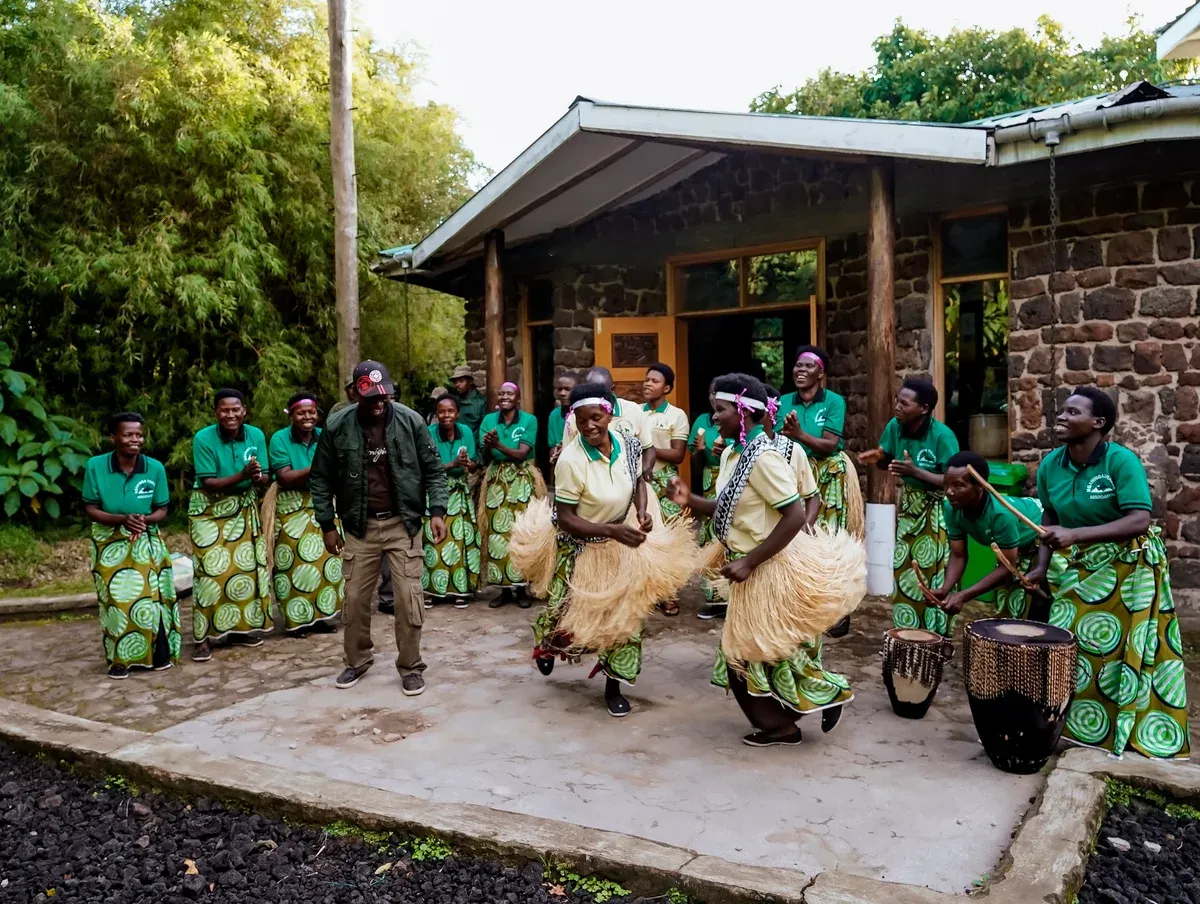
A Batwa dance at a community centre near the parks. Photo: Happyartst, CC BY-SA 4.0, via Wikimedia Commons.
How close do I need to be from the gorillas?
You must keep a distance of 10 metres (32.8 ft) from the gorillas, the Uganda Wildlife Authority rule, keep your voice low and be 15 or older to trek at all.
The park rules protect both you and the gorillas, and rangers enforce them during the hour.
The rules in one place
Trekkers must be 15 or older and walk in groups of up to eight visitors with an armed ranger and trackers. Tourists must maintain a distance of 10 metres (32.8 ft) from the mountain gorillas and keep voices low. These rules exist because gorillas share diseases with humans and can be stressed by noise or crowding.
How do you get to Bwindi?
Daily scheduled flights run from Entebbe to Kisoro airstrip for the southern sectors and to Kihihi airstrip for northern Bwindi, taking about 1 hour a short while.
Flying saves a long drive and works well for short trips, especially treks from Kigali in Rwanda.
By air and by road
Kisoro serves Rushaga and Nkuringo in the south. Kihihi serves Buhoma and Ruhija in the north and east. Road transfer from Kigali is popular because the border is close, which is why one-day treks from Kigali exist.
For a full fly-in safari, the 8-Day Uganda Safari with Chimps, Gorilla Trekking and Queen Elizabeth combines Bwindi with other parks.
Source: Uganda Wildlife Authority.
Bwindi Gorilla Trekking: Questions
How much is a gorilla permit for Bwindi?
A gorilla tracking permit for Bwindi costs $800 for foreign non-residents and $700 for foreign residents, with park entry for the day and the guide fee inside it. In April, May and November the Uganda Wildlife Authority sells low season permits at $600, which cannot be rescheduled.
How many gorillas live in Bwindi?
Bwindi protects approximately 459 mountain gorillas, almost half of the world's remaining population, according to the Uganda Wildlife Authority. The park has 25 habituated gorilla groups.
What is the minimum age for gorilla trekking in Bwindi?
The minimum age is 15 years. Each gorilla group takes at most eight visitors a day, for one hour.
How long does a Bwindi gorilla trek take?
It depends on where the family is that morning: the listings in this catalogue quote 1 to 6 hours of walking on steep, muddy trails, plus one hour with the gorillas. The 3-Day Bwindi Gorilla Trek with the Batwa Trail and a Lake Bunyonyi Canoe Ride builds a rest night at Lake Bunyonyi in after the trek.
Can I do Bwindi gorilla trekking from Kigali?
Yes. The southern sectors, Rushaga and Nkuringo, are the part of Bwindi closest to Kigali. The 1-Day Bwindi Gorilla Tour from Kigali (Permit Extra) leaves at 2 am and costs $1,100 once the $800 permit is added.
More Guides
- What to Wear for Gorilla Trekking: Uganda Packing List
Treks run 2 to 7 hours, so wear quick-dry trousers, waterproof boots and tall socks. The full outfit for 2027, then compare tours.
- Uganda Gorilla Trekking Permit: Price, Booking and Rules
The Uganda gorilla trekking permit costs $800, or $600 in April, May and November. Who can book it, what it covers and the 2027 rule changes.
- Best Time for Gorilla Trekking in Uganda: Month by Month
Gorilla trekking in Uganda is best from June to September in 2027, with 27°C highs and drier trails. April and May bring quieter forests.